We Serve Clients Nationwide, Call us at (855) 696-9802 to Reserve Your Samples Today
Your Materials Inspiration
Starts here.
Surface Shop is an expansive purveyor of exquisite natural stone products from around the globe. Whether you’re brushing up on the difference between marble and limestone on Surface Culture, our wide-ranging blog, or working with one of our national distributors on a personal project, we’re excited you’re here.
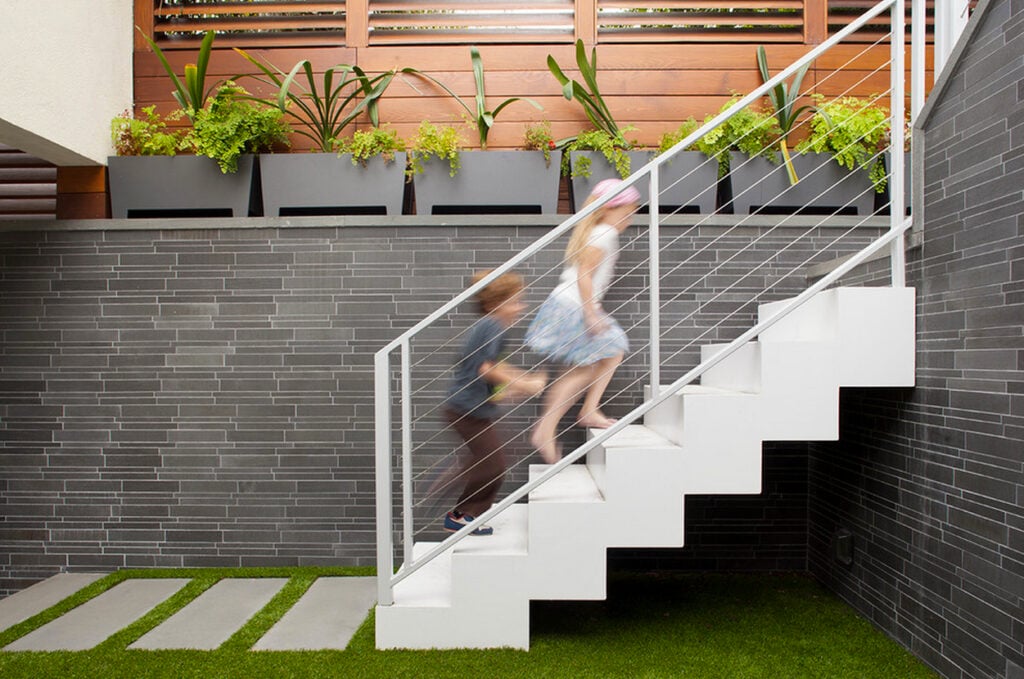
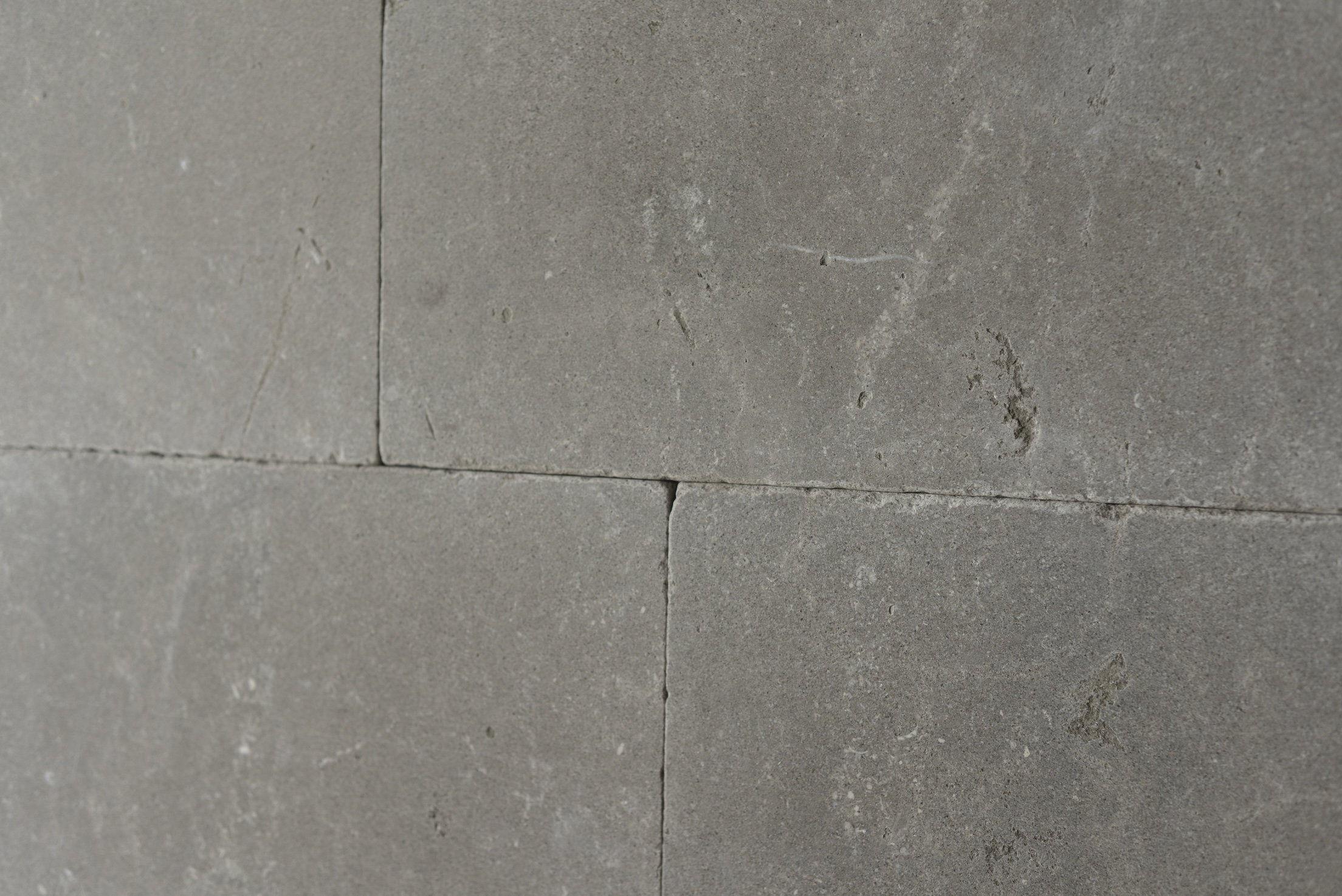
Grey Basalt Linear Wall Cladding behind White Staircase with Rectangular Stepping Stones
A well-designed stepping stone walkway does more than guide foot traffic. It organizes outdoor space, frames planting beds, and introduces material contrast without the cost or permanence of a full poured slab or continuous paver system.
This guide outlines six stepping stone walkway ideas that work in real conditions — from front entry approaches to garden paths and side-yard transitions. Each concept includes where it performs best, recommended materials, and practical installation notes covering base prep, spacing, edging, and drainage. The goal is not just inspiration, but clarity on how to build a walkway that holds up over time.
Planning a Stepping Stone Walkway That Lasts
Before choosing a layout, define the purpose of the path.
1. Location and Use Matter
Front entry walkway: Higher visibility, higher foot traffic, and greater safety expectations. Stones should be larger, more stable, and carefully leveled.
Garden path: Lower traffic, softer aesthetic. Irregular shapes and planting integration are more appropriate.
Side yard or service path: Functional priority. Drainage and mud control are often the primary concerns.
Understanding traffic frequency determines stone thickness, base depth, and joint treatment.
2. Drainage and Slope
Any walkway — even a simple stepping stone path — must account for water movement.
Avoid placing stones in low points where water collects.
Maintain a subtle slope (approximately 1–2%) away from structures.
Ensure the base layer drains well to prevent freeze-thaw movement or settlement.
Poor drainage is one of the main reasons stepping stones shift over time.
3. Spacing and Stride Comfort
Spacing affects comfort more than appearance.
A practical rule of thumb:
Center stones approximately 24 inches apart for an average walking stride.
Adjust spacing slightly for family use patterns (children vs adults).
Test layout placement before committing. Walk the path naturally and refine spacing until it feels intuitive.
4. Weed Control and Maintenance
Plan how you will manage growth between stones.
Options include:
Gravel infill
Mulch
Groundcover planting
Turf integration
Each has maintenance implications. Weed barrier fabric beneath gravel or mulch reduces long-term upkeep, but drainage must still function properly.
Materials Checklist for Stepping Stone Walkways
Material choice influences both appearance and performance.
Natural Stone vs Pavers vs Concrete
Natural Stone
Varied texture and tone
High durability
Ideal for high-end landscapes and architectural homes
Often thicker and more substantial underfoot
Concrete Pavers
Uniform dimensions
Clean geometry
Cost predictable
More contemporary or transitional look
Poured Concrete Steppers
Budget-friendly
Limited texture depth
May crack over time in freeze-thaw climates
For refined outdoor projects, natural stone offers long-term visual depth and material credibility. For examples of architectural-grade stone suited for exterior applications, explore natural stone flooring options at The Surface Shop.
Base Materials
Most durable installations include:
4–6 inches of compacted crushed gravel (for high-traffic areas)
1 inch of leveling sand (where appropriate)
Edging restraints (steel, aluminum, or stone borders)
Skipping base prep leads to settling and uneven stones.
1. Straight-Line Minimalist Path for Modern Homes
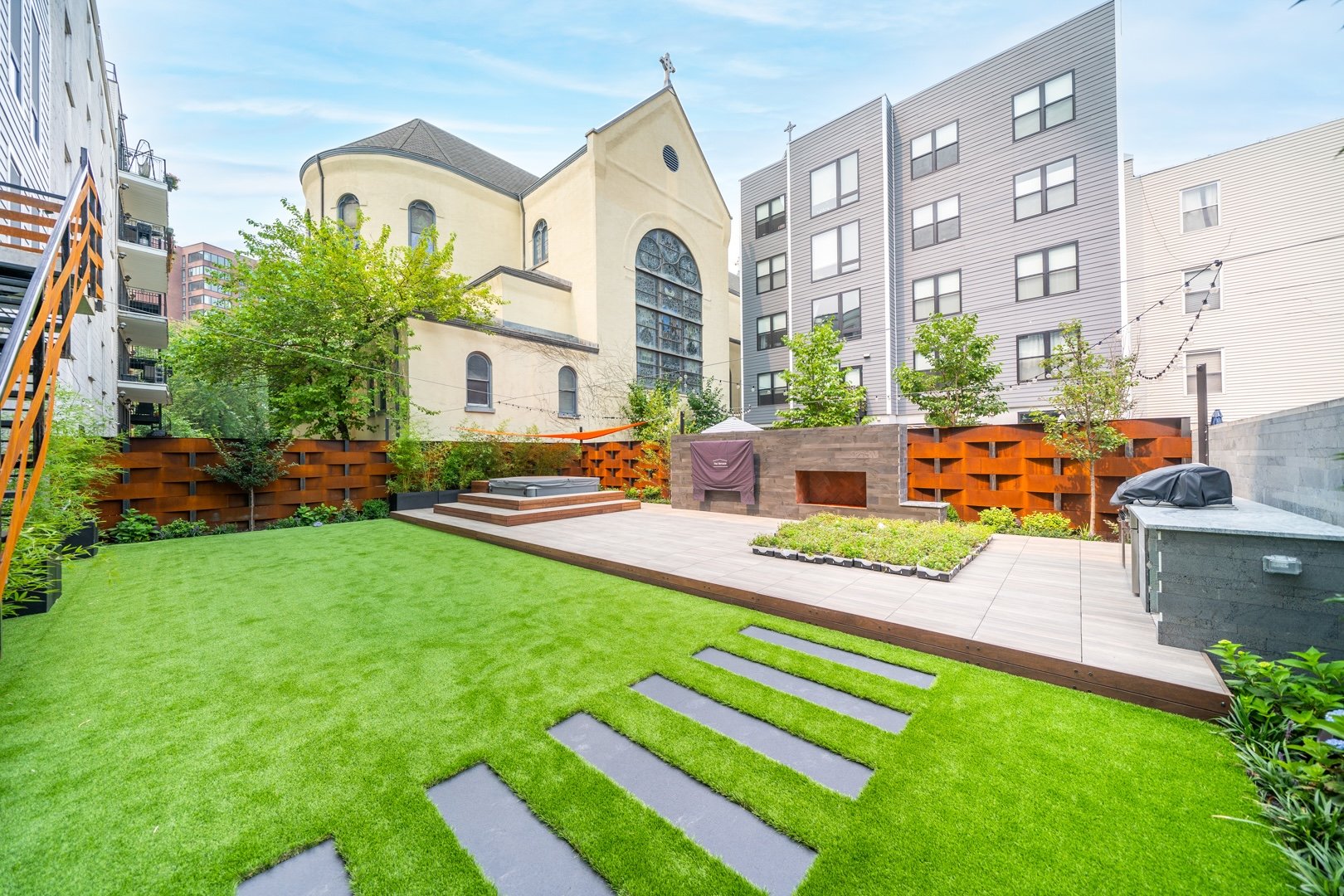
Minimalist linear pathway featuring rectangular basalt stepping stones, installed within an outdoor amenities space at a mixed-use condominium in New Jersey, complemented by Grey Linear stone accents.
Best for: Modern architecture, side yards, structured landscapes.
This layout uses evenly spaced rectangular or square stones in a straight run. The visual impact comes from repetition and precision rather than ornament.
Pairing Recommendations
Clean planting beds with low-profile grasses
Metal or concrete edging
Neutral gravel or decomposed granite infill
Installation Notes
Maintain consistent spacing between stones.
Use a string line to ensure alignment.
Stones must be set perfectly level to avoid visual irregularity.
Compact base thoroughly to prevent shifting.
For contemporary homes, symmetry and restraint matter. Slight deviations in spacing are immediately noticeable.
2. Curved Garden Stepping Stone Walkway With Planting Pockets
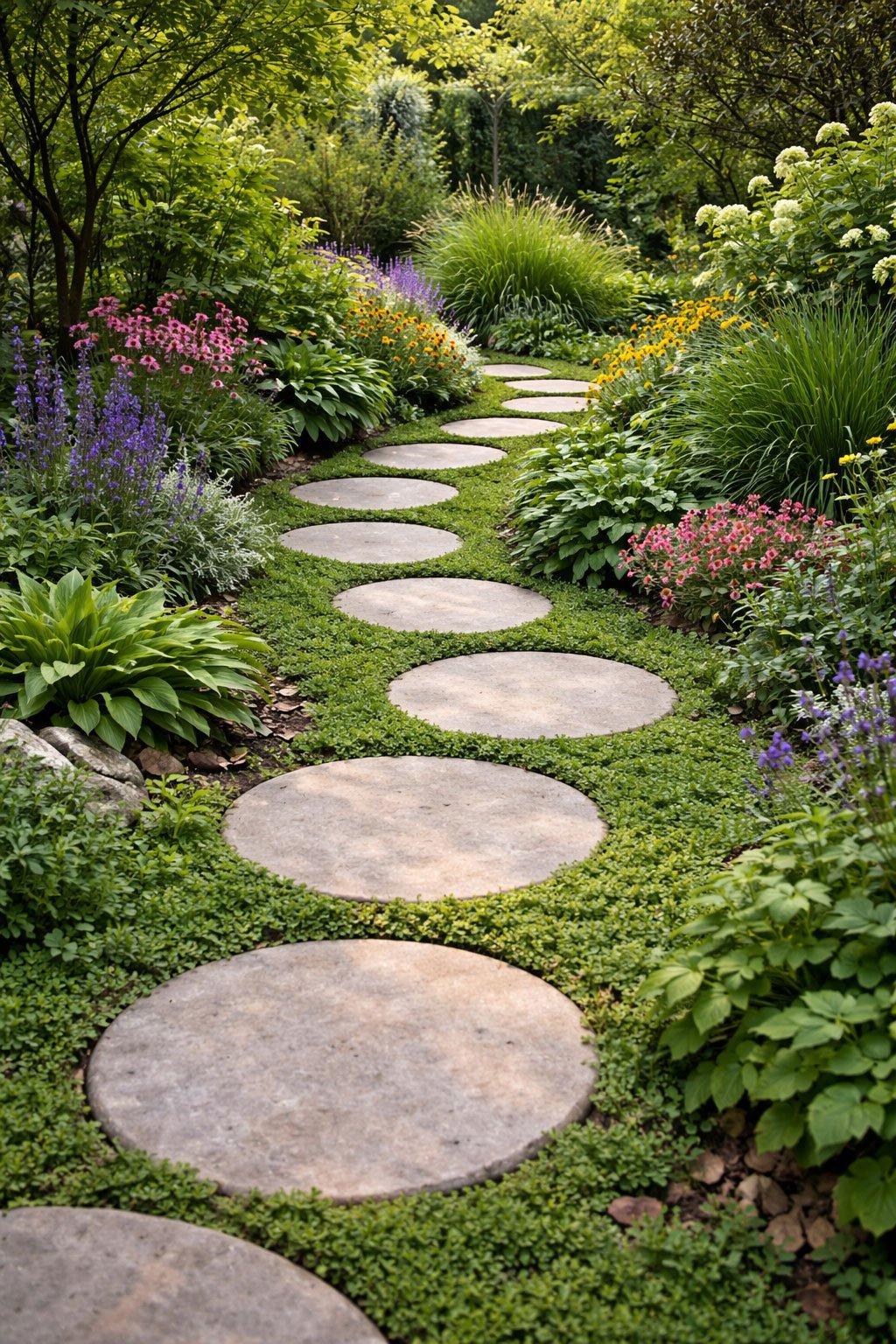
Curved garden pathway with round natural stone stepping stones set in green groundcover, surrounded by layered flowering plants and ornamental grasses.
This approach responds to garden stepping stone walkway ideas search intent — softer, organic layouts integrated into landscape planting.
Best for: Cottage gardens, layered planting beds, informal yards.
Instead of a straight line, stones follow a gentle curve, weaving through planting areas. Gaps between stones can support creeping thyme, moss, or low groundcover.
Installation Notes
Excavate along the curved path and compact the base evenly.
Install a weed barrier beneath planting zones if using gravel beneath groundcover.
Maintain proper drainage under planting areas to prevent root rot and stone movement.
Keep spacing comfortable for stride; curves should not force awkward stepping patterns.
Soft curves work visually, but the base prep must remain consistent throughout the arc.
3. Rock and Stepping Stone Walkway With Gravel Fill
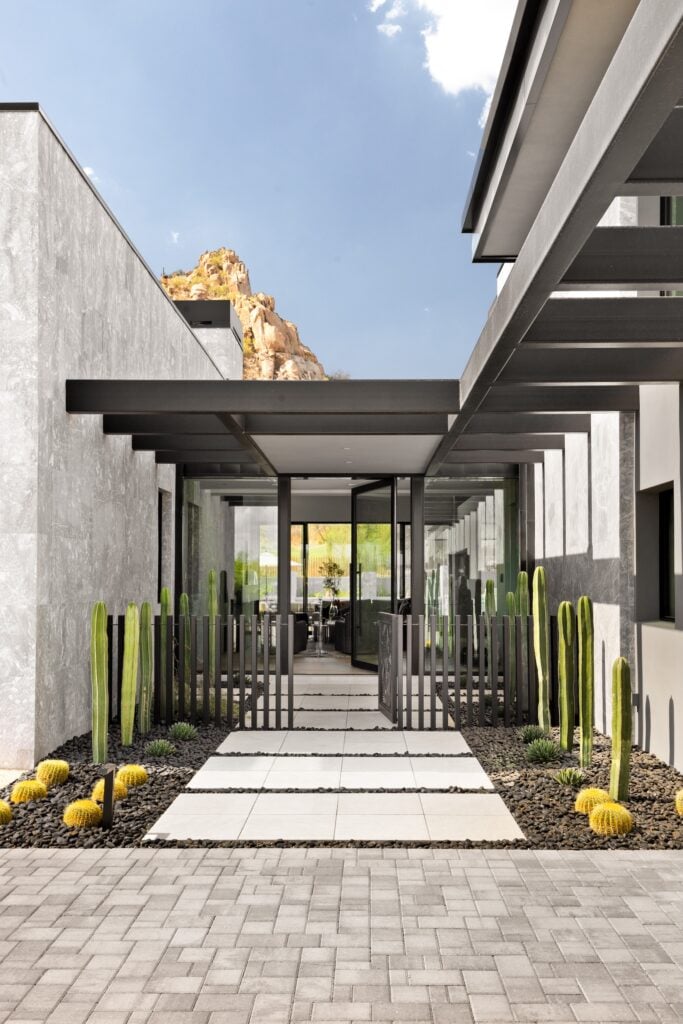
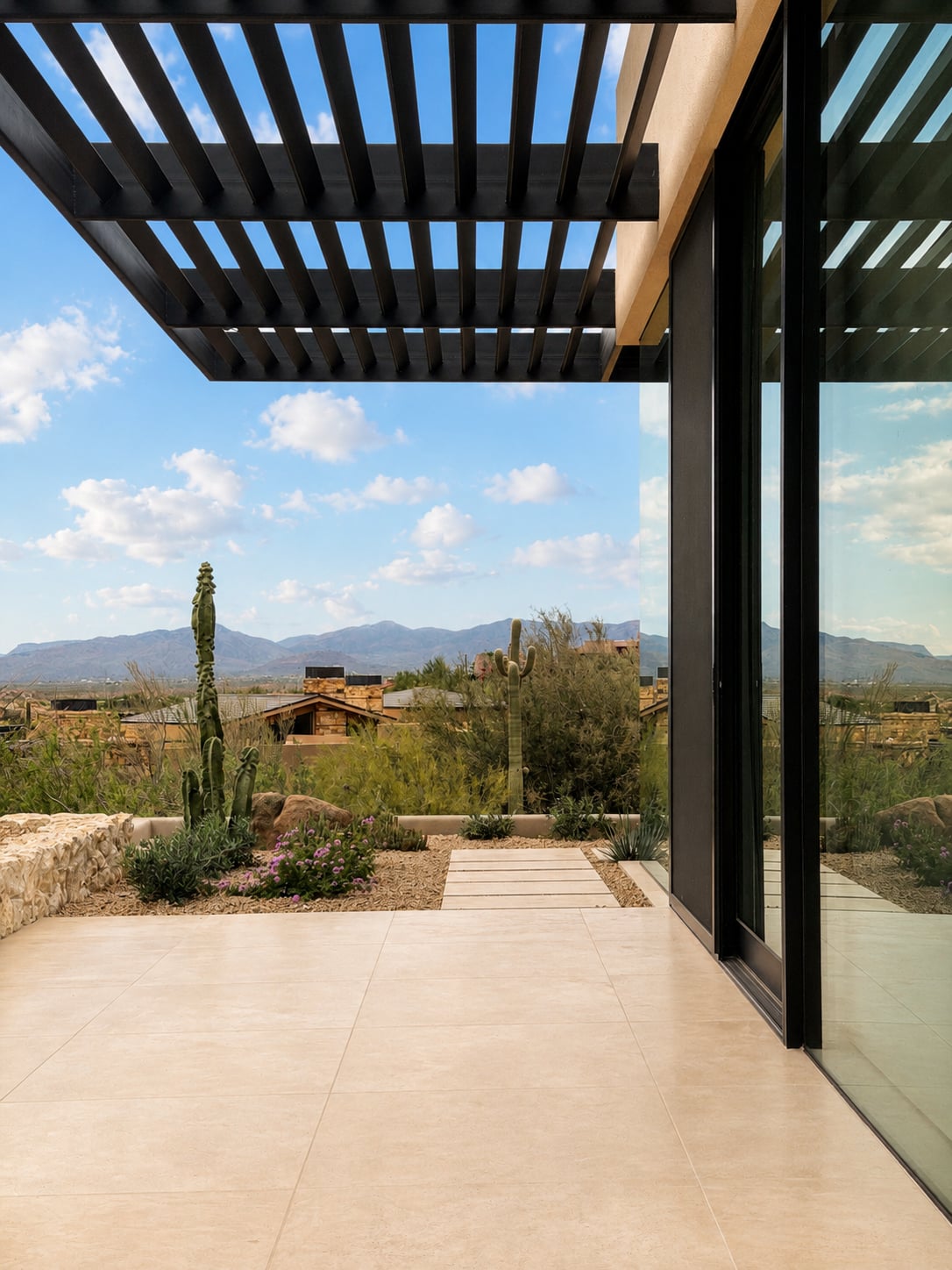
Modern front entrance stepping stone walkway with large-format rectangular natural stone pavers separated by gravel fill, framed by desert landscaping and clean contemporary architecture.
A rock and stepping stone walkway blends larger stones with gravel infill for improved drainage and reduced mud.
Best for: Rustic properties, wooded lots, or areas with frequent rain.
This layout controls mud while maintaining a casual appearance.
Recommended Gravel
3/8” to 3/4” crushed stone
Avoid rounded pea gravel for high-traffic zones (it shifts easily)
Installation Notes
Install metal or stone edging to contain gravel.
Compact gravel base beneath stepping stones separately from decorative surface gravel.
Set stones slightly above gravel grade to prevent pooling.
Use landscape fabric below gravel to reduce weed growth.
This option balances budget control with performance, especially in climates where drainage is critical.
4. Paver Stepping Stone Walkway With a Consistent Grid
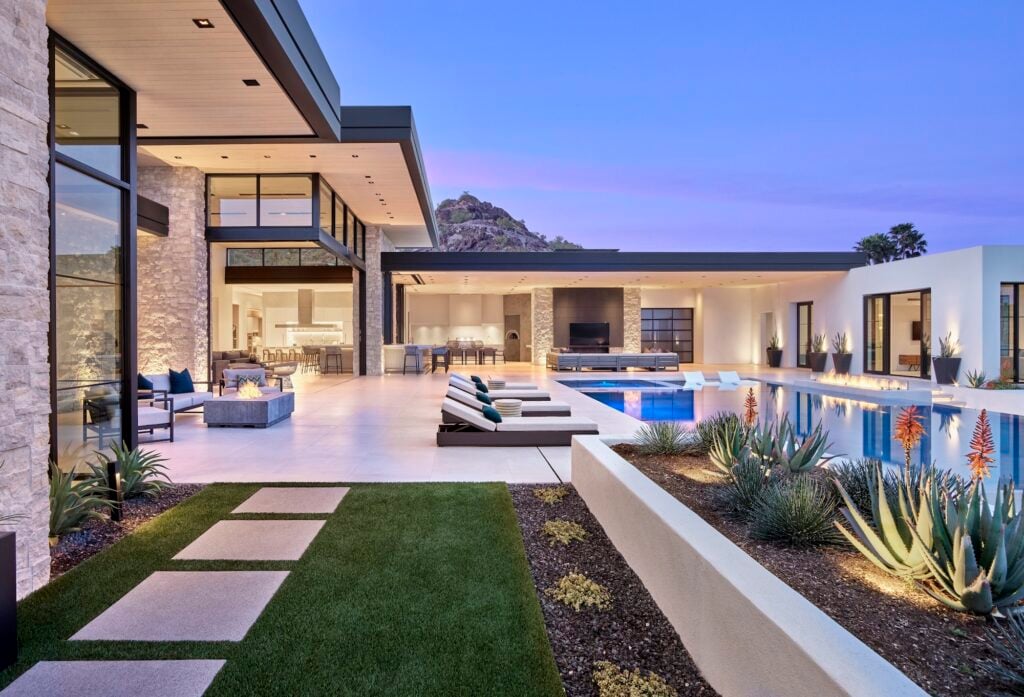
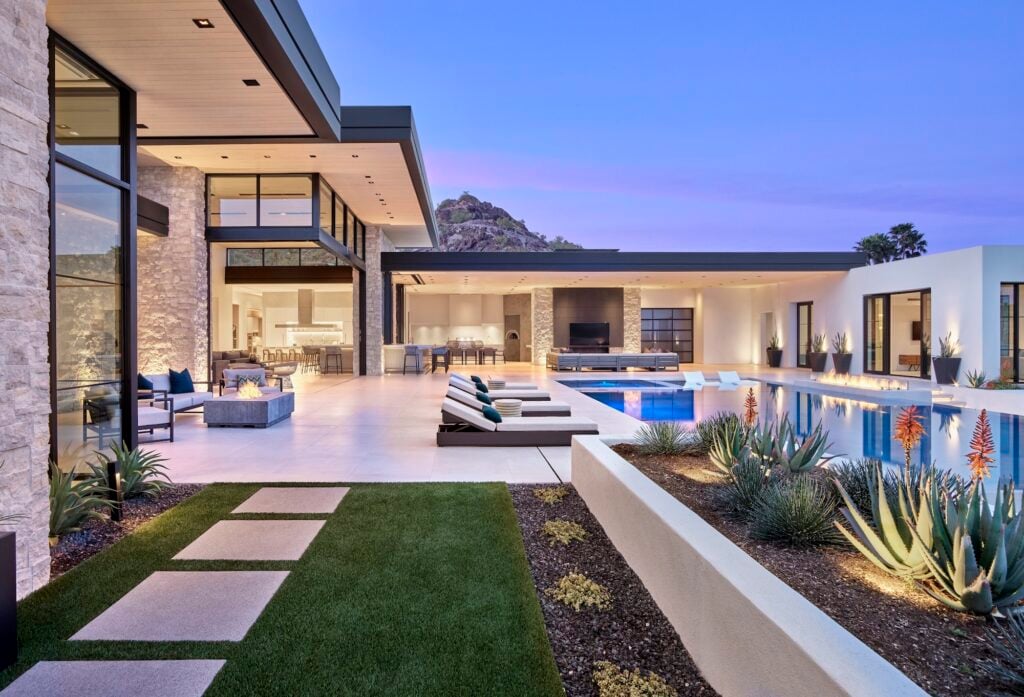
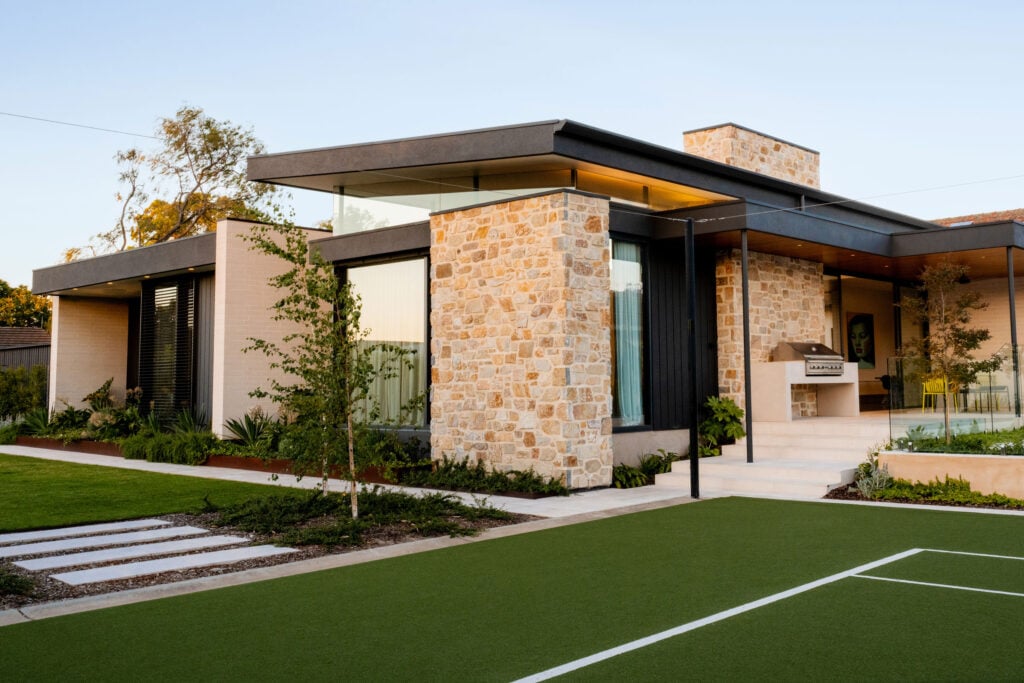
Contemporary garden stepping stone walkway featuring large-format square natural stone pavers set in manicured lawn, connecting a modern patio and pool area within a luxury residential landscape.
A paver stepping stone walkway emphasizes geometry and predictability.
Best for: Transitions between patios and lawn, urban yards, contemporary homes.
Instead of irregular shapes, uniform pavers are spaced evenly within grass or gravel.
Installation Notes
Ensure paver thickness consistency.
Compact 4–6 inches of crushed gravel for stability.
Use sand for fine leveling before placement.
Maintain flush height with surrounding surface to reduce trip hazards.
The grid layout creates rhythm. Precision in spacing and alignment is essential to avoid visual drift.
5. Front Entrance Stepping Stone Walkway Ideas With Lighting
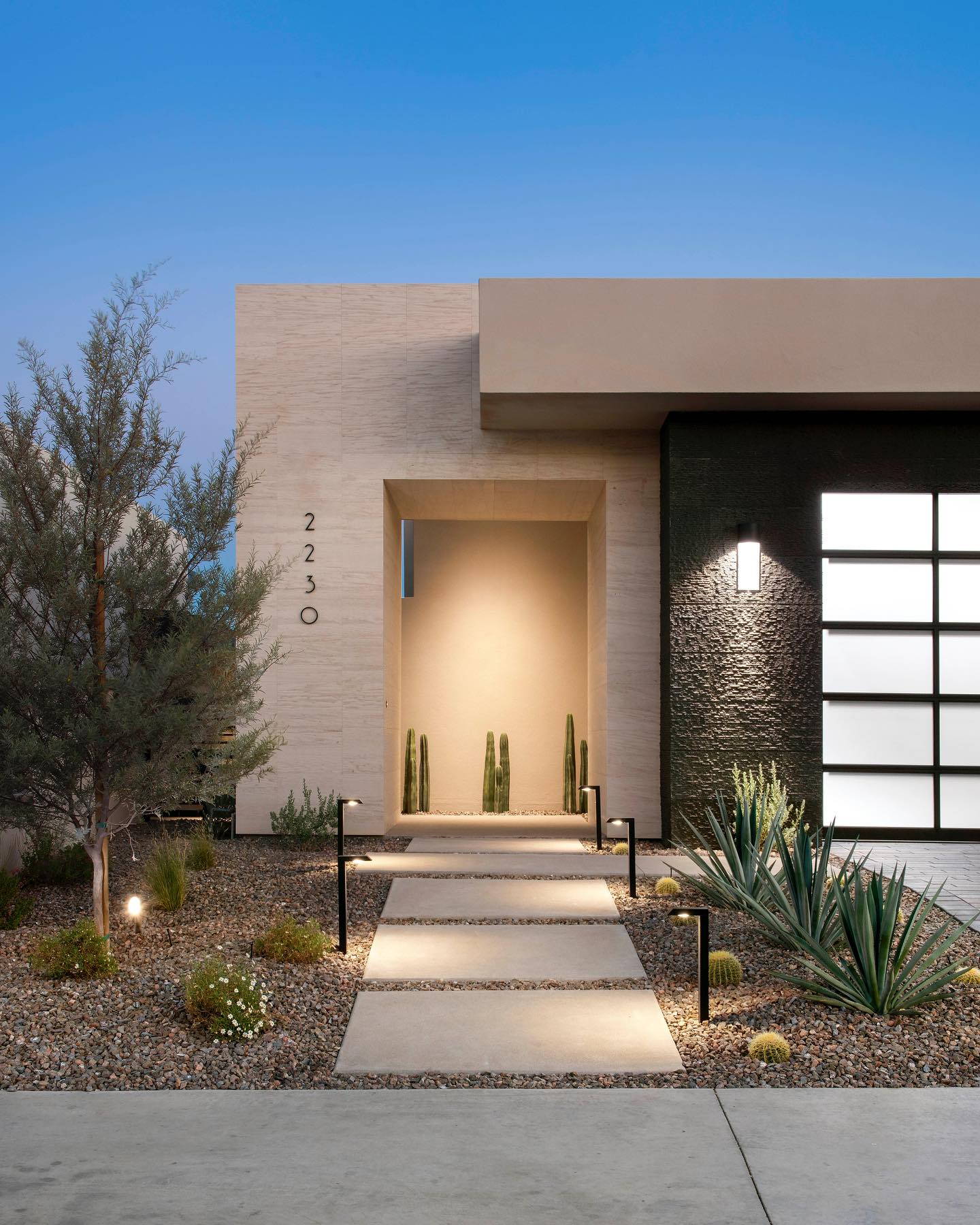
Front entrance stepping stone walkway featuring large rectangular natural stone pavers set in gravel with integrated low-voltage pathway lighting, creating a clean, illuminated approach to a contemporary home.
For curb appeal, the entry path carries the most visual weight.
Best for: Primary approach to the front door.
Use larger format stones (18–24 inches wide or more) centered on the doorway. The path should feel intentional and proportional to the entry scale.
Enhancements
Low-voltage or solar path lighting
Subtle border planting
Defined edging
Installation Notes
Set stones perfectly level for safety.
Avoid wobble by fully bedding each stone into compacted base.
Increase base depth for high-traffic front entry zones.
Maintain consistent alignment toward the entry focal point.
Front entrance stepping stone walkway ideas should prioritize both aesthetics and safety. Uneven stones near an entry create liability concerns.
6. Large-Format Stepping Stones Over Mulch for Quick Upgrades
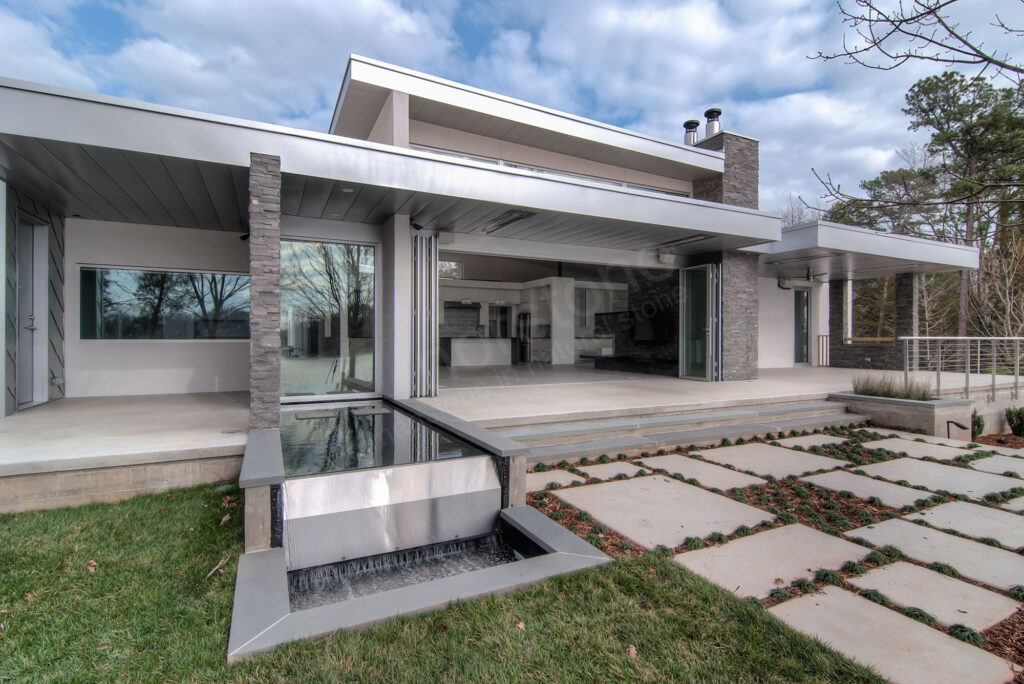
Modern residential landscape featuring large-format rectangular stepping stones installed over mulch and groundcover, forming a clean grid-style garden walkway adjacent to a contemporary home.
This layout is practical for fast landscape refreshes or rental-friendly updates.
Best for: Informal backyards, temporary improvements, low-budget projects.
Large stones are set over compacted soil with mulch infill between.
Installation Notes
Excavate slightly beneath each stone to reduce wobble.
Add compacted gravel beneath stones even if mulch fills the gaps.
Replenish mulch annually.
Monitor stone height over time and reset if settlement occurs.
While faster to install, this approach still benefits from minimal base prep beneath each stone.
Common Mistakes to Avoid With Stepping Stone Walkways
Even simple paths fail when fundamentals are ignored.
Skipping base prep: Stones settle unevenly.
Uneven heights: Creates trip hazards.
Poor drainage: Causes frost heave or erosion.
No edging: Gravel spreads into lawn or beds.
Overgrown groundcover: Conceals stone edges and increases maintenance.
Durability depends less on the stone and more on what supports it.
Choosing the Right Look: Stone, Pavers, or a Mixed Path
For homeowners, designers, and contractors evaluating options:
Choose natural stone for long-term durability, organic variation, and architectural quality.
Choose pavers for controlled geometry and predictable sizing.
Choose mixed materials when blending rustic and modern elements.
Consider:
Climate (freeze-thaw cycles demand stronger base prep)
Maintenance tolerance
Budget
Style of home and landscape
Natural stone tends to age more gracefully and integrates well across design styles, particularly in higher-end residential settings.
Frequently Asked Questions (FAQs)
How far apart should stepping stones be in a walkway?
Typically 24 inches center-to-center works for most adults. Adjust slightly based on stride comfort and test placement before final installation.
What is the best base for a stepping stone walkway?
Compacted crushed gravel (4–6 inches) topped with leveling sand provides the most stability for long-term performance.
What is the best material to put between stepping stones: gravel, mulch, or groundcover?
Gravel offers the best drainage and lowest maintenance. Mulch is economical but requires replenishment. Groundcover provides visual softness but demands ongoing trimming.
How do you keep stepping stones from wobbling or sinking over time?
Excavate beneath each stone, install a compacted gravel base, and ensure full contact beneath the stone surface. Avoid placing stones directly on loose soil.
Ready to Build Your Walkway?
A stepping stone walkway can be minimal or expressive, structured or organic. The difference between a short-term improvement and a lasting landscape feature lies in material choice and base preparation.
If you’re planning a path that aligns with architectural quality and long-term durability, explore natural stone options designed for flooring on the Surface Shop site for unique, architectural grade flooring products.
Careful planning, appropriate materials, and disciplined installation will ensure your walkway performs as well as it looks.
At Surface Shop, we believe there is a story behind every surface. That’s why we created Surface Culture, an industry leading digital publication that covers a range of topics from How To Guides to Architectural Trends in the world of luxury architectural finishes Browse our articles to dial in your knowledge of how surfaces impact architectural design, or simply use them to get inspired. Either way, we hope you enjoy, and wish you well on your journey toward appreciating materiality in architecture.
Stepping stone walkway ideas for front entrances and gardens. See 6 layouts, plus spacing, base prep, and materials to help your path look great and last.
Natural stone veneer exterior wall panels can add texture and curb appeal to your home. Learn the key steps, tools, and tips for installing stone veneer on exterior walls.
Discover 10 stunning natural stone flooring ideas to elevate your home. From elegant marble to rugged slate, find the perfect style to suit your space.
Discover the most durable pavers for your next project. Explore top options that combine strength, longevity, and style to withstand the test of time and elements.