
Your Materials Inspiration Starts here.
Surface Shop is an expansive purveyor of exquisite natural stone products from around the globe. Whether you’re brushing up on the difference between marble and limestone on Surface Culture, our wide-ranging blog, or working with one of our national distributors on a personal project, we’re excited you’re here.
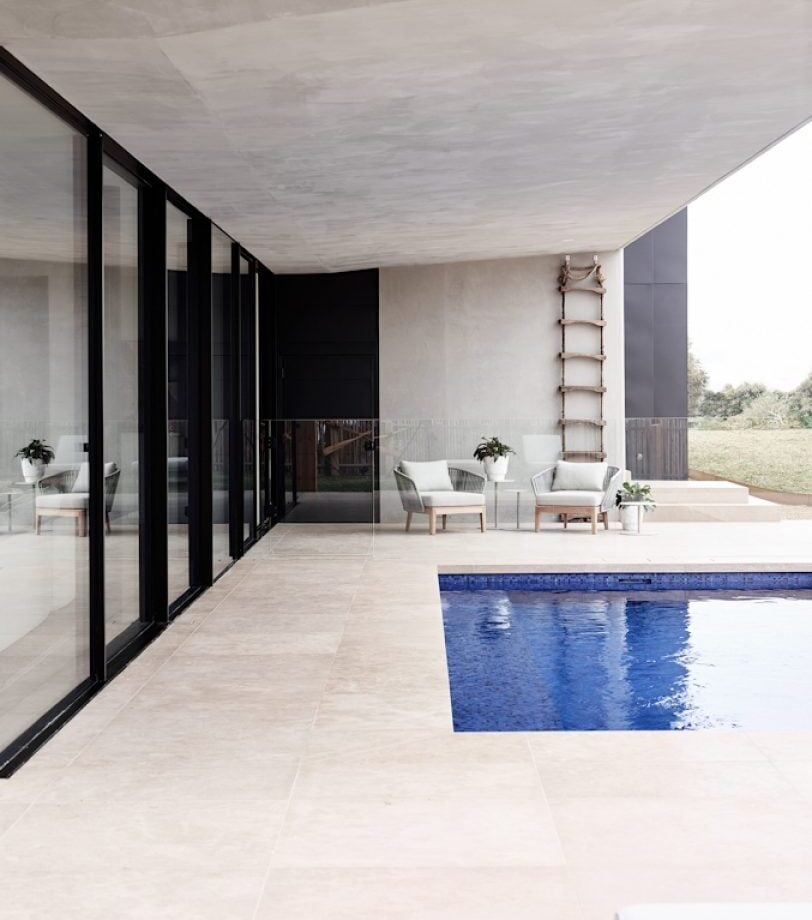
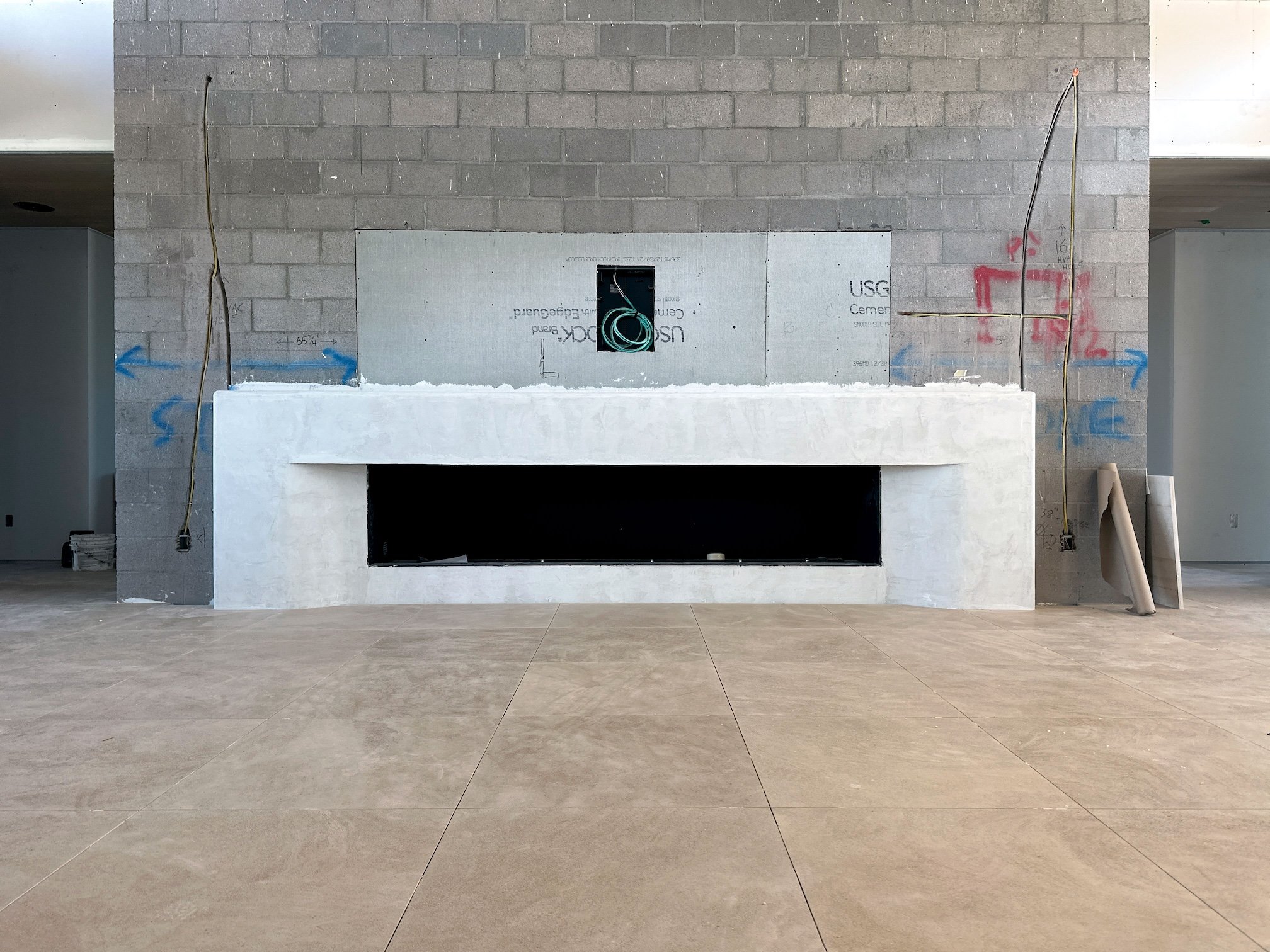
Choosing the right flooring can transform both the look and long-term value of your home. Natural stone flooring remains one of the most enduring options because it combines timeless style, durability, and design versatility. From kitchens and bathrooms to living areas and outdoor entertaining spaces, the right stone floor can elevate the character of a project while standing up to daily use.
In this guide, we compare the main natural stone flooring types and where each one performs best. From elegant marble and rugged slate to warm limestone, travertine, and sandstone, each material offers a distinct balance of appearance, maintenance, and performance. If you are exploring natural stone tile flooring for an interior space, or natural stone paving and pavers for patios, pool decks, and other outdoor living areas, this breakdown will help you choose the best option for your project. For a closer look at available products and finishes, explore our Natural Stone Flooring collection. If you are looking specifically for interior inspiration, see our guide to 10 natural stone flooring ideas for indoor spaces.
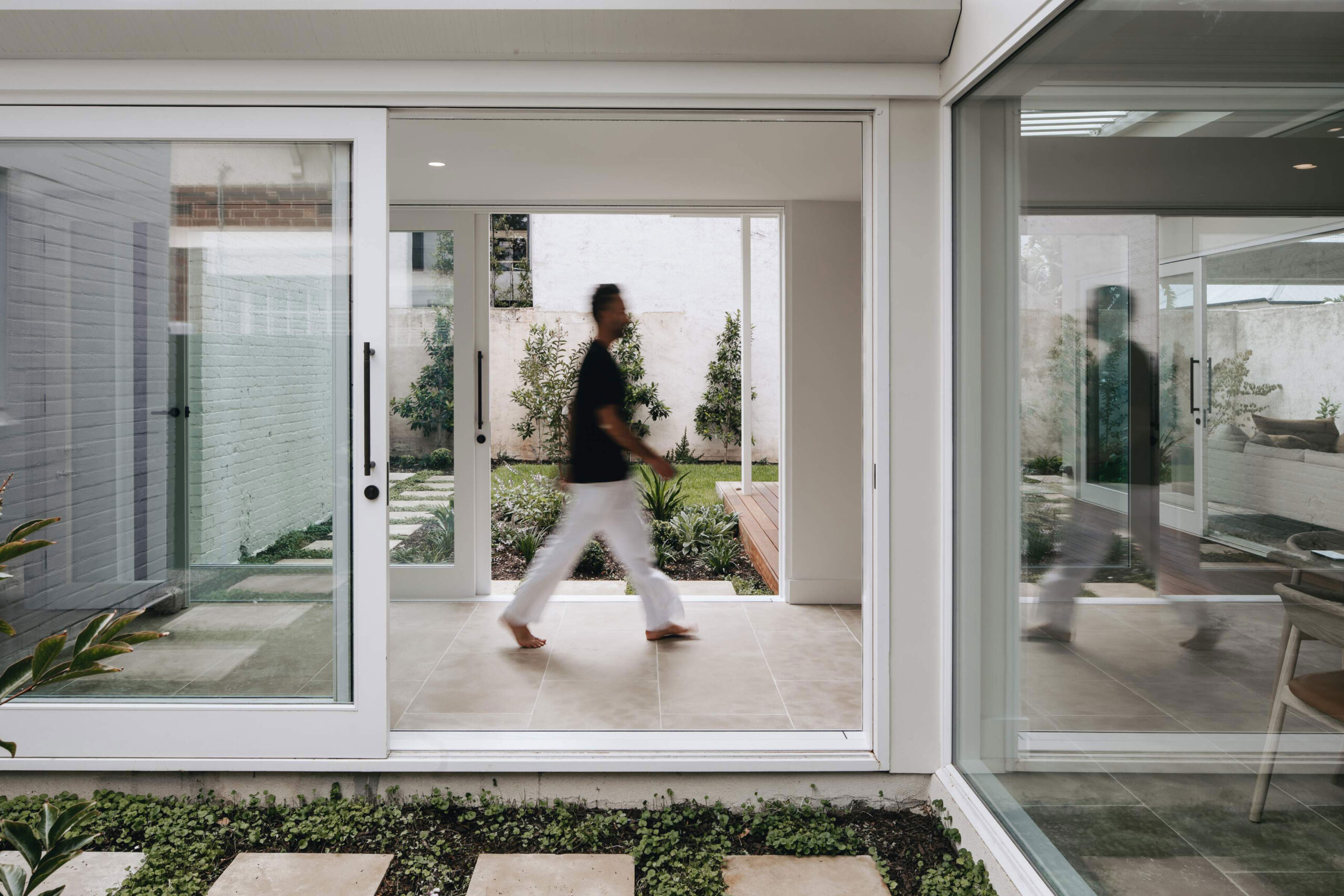
Natural stone flooring is a premium surface material made from quarried stone that is cut and finished into tiles, pavers, or modular flooring pieces. Unlike manufactured surfaces, natural stone brings authentic variation in color, texture, and pattern, giving each installation a more organic and distinctive look.
Popular types of natural stone flooring include granite, marble, limestone, travertine, slate, and sandstone. Each has its own character and practical strengths, which is why natural stone works well across a wide range of applications, from refined interior floors to exterior paving for patios, pool surrounds, courtyards, and walkways.
What makes natural stone flooring especially appealing is its combination of visual depth, durability, and longevity. Whether you prefer the clean sophistication of honed limestone, the rustic character of tumbled stone, or the bold movement of slate and marble, natural stone offers options for both classic and contemporary design styles.
Natural stone flooring is especially valued for its longevity, design flexibility, and ability to work across both interior and exterior spaces. With the right finish and proper maintenance, stone floors can handle daily wear while offering a level of texture, variation, and authenticity that manufactured surfaces often cannot replicate.
Before diving into each material in more detail, this quick comparison chart highlights how the main types of natural stone flooring differ in appearance, upkeep, and performance. Use it as a starting point to narrow down the best fit for your space, whether you are planning an interior renovation or selecting natural stone paving for a patio, pool deck, or other outdoor living area.
| Stone Type | Best For | Durability | Maintenance | Slip Resistance | Style |
|---|---|---|---|---|---|
| Marble | Luxury interiors and elegant outdoor entertaining spaces | High | Moderate | Fair to Good, depends on finish | Elegant, refined, high-end |
| Limestone | Warm, neutral interiors and timeless outdoor spaces | Moderate to High | Moderate | Good, especially in textured finishes | Soft, classic, understated |
| Travertine | Patios, pool areas, and rustic indoor-outdoor designs | High | Moderate | Good | Aged, earthy, Mediterranean |
| Sandstone | Outdoor spaces and warm-toned natural designs | Moderate to High | Moderate | Good | Warm, organic, relaxed |
| Granite | Busy households and exterior hardscape applications | Excellent | Low | Fair to Good, depends on finish | Clean, durable, bold |
| Quartzite | High-traffic areas needing strength and visual interest | Excellent | Low to Moderate | Fair to Good, depends on finish | Crisp, luminous, contemporary |
| Slate | Bathrooms, mudrooms, and high-grip areas | High | Low to Moderate | Excellent | Textured, dramatic, natural |
Not every stone floor performs the same way in every setting. Some materials are better suited to low-maintenance family homes, while others are chosen for luxury interiors, outdoor living spaces, or warm, natural color palettes. If you are narrowing down the best natural stone flooring for your project, these quick recommendations can help point you in the right direction.
Natural stone flooring comes in a wide range of materials, each with its own character, durability, and ideal applications. Below, we review seven of the most important natural stone flooring types, from high-performing marble and versatile limestone to travertine, sandstone, granite, slate, and quartzite. Some are best known for refined interiors, while others also excel in outdoor spaces such as patios, pool surrounds, and walkways.
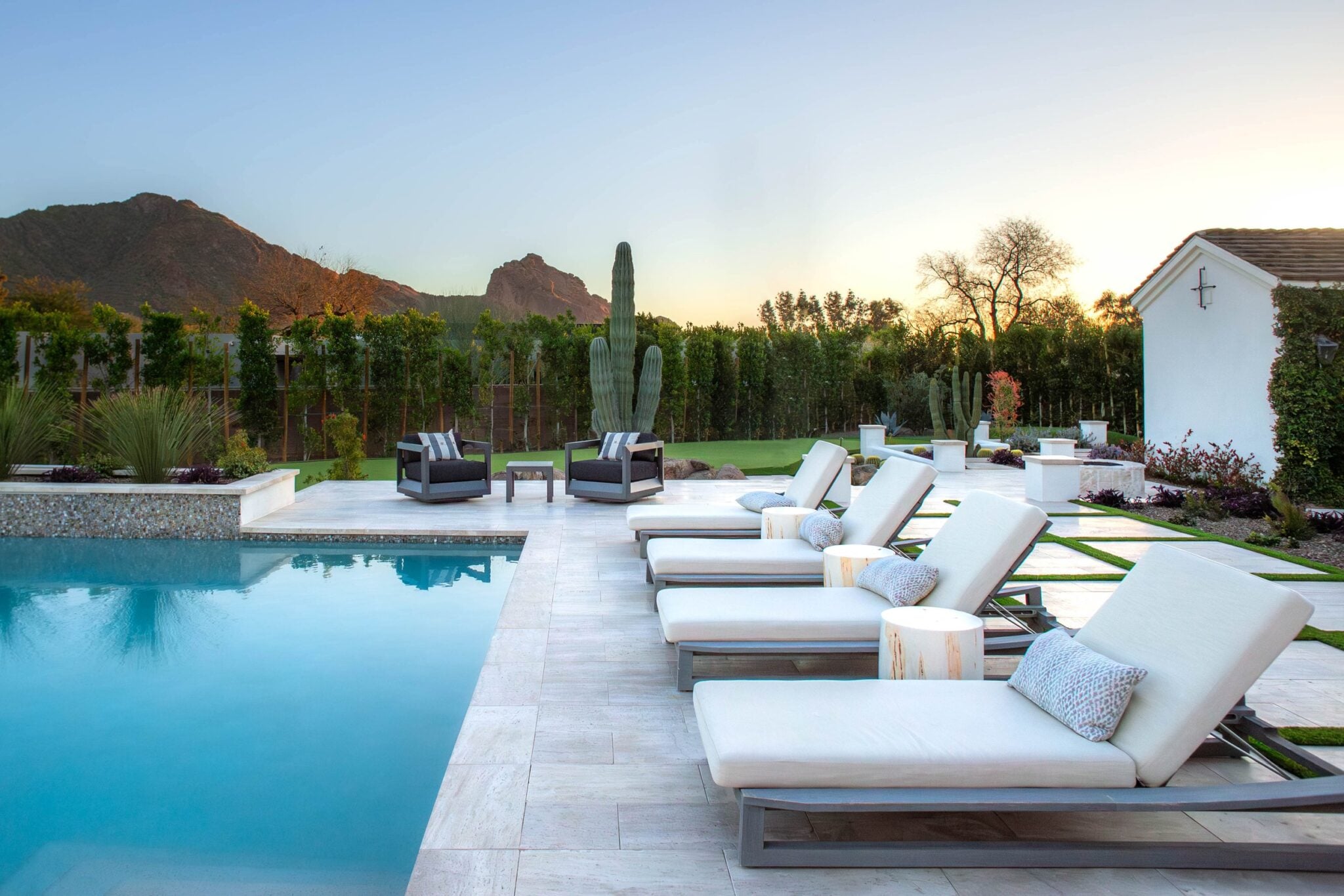
Marble is one of the most timeless and visually striking natural stone flooring options, valued for its elegant veining, refined surface, and broad design versatility. While it is often associated with luxury interiors, marble is also a highly durable stone – one of the most durable stone pavers in fact – meaning it can perform beautifully in all exterior applications, making it one of the most versatile materials in the natural stone flooring category.
For flooring, marble works especially well in spaces where visual impact matters. Indoors, it brings a polished and elevated feel to entryways, living spaces, bathrooms, and other high-end residential interiors. Outdoors, marble can create equally stunning paved surfaces for patios, pool surrounds, pathways, and entertaining areas, offering a premium look that feels both substantial and enduring.
One of marble’s biggest strengths is the way it combines beauty with long-term performance. Its distinctive movement, timeless appeal, and strong durability make it a compelling choice for homeowners who want a stone floor that feels architectural, luxurious, and built to last across both indoor and outdoor spaces.

Limestone is one of the most versatile natural stone flooring options, valued for its soft organic character, warm neutral tones, and ability to work beautifully across both interior flooring and exterior paving applications. Its understated appearance makes it especially appealing for projects that call for a timeless, natural look rather than a bold or highly dramatic surface.
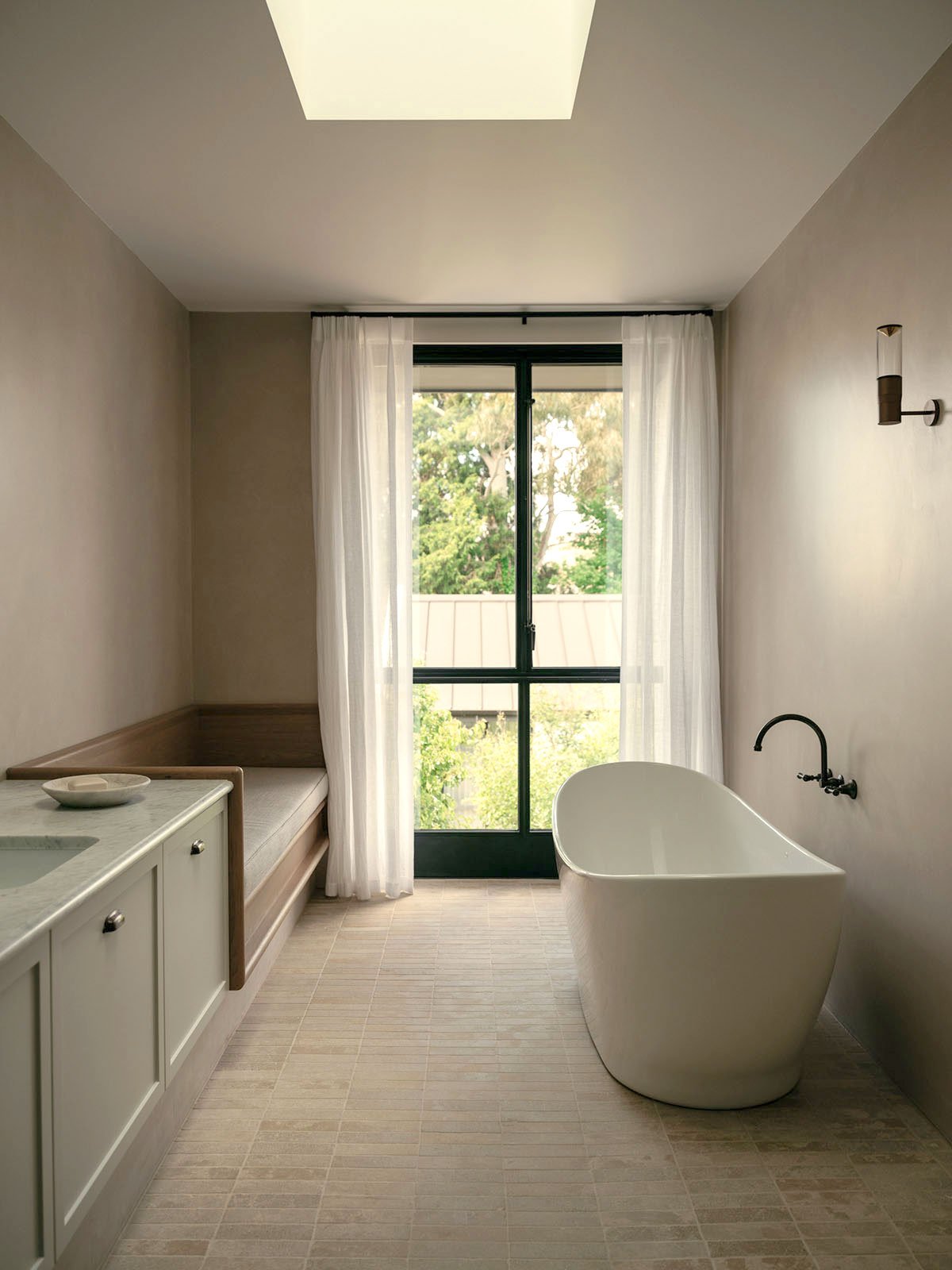
For interiors, limestone works well in living spaces, kitchens, and bathrooms where a refined but approachable material is desired. Outdoors, it is also widely used as natural stone paving for patios, courtyards, pool surrounds, and connected indoor-outdoor spaces, where its relaxed character and tonal warmth feel especially at home.
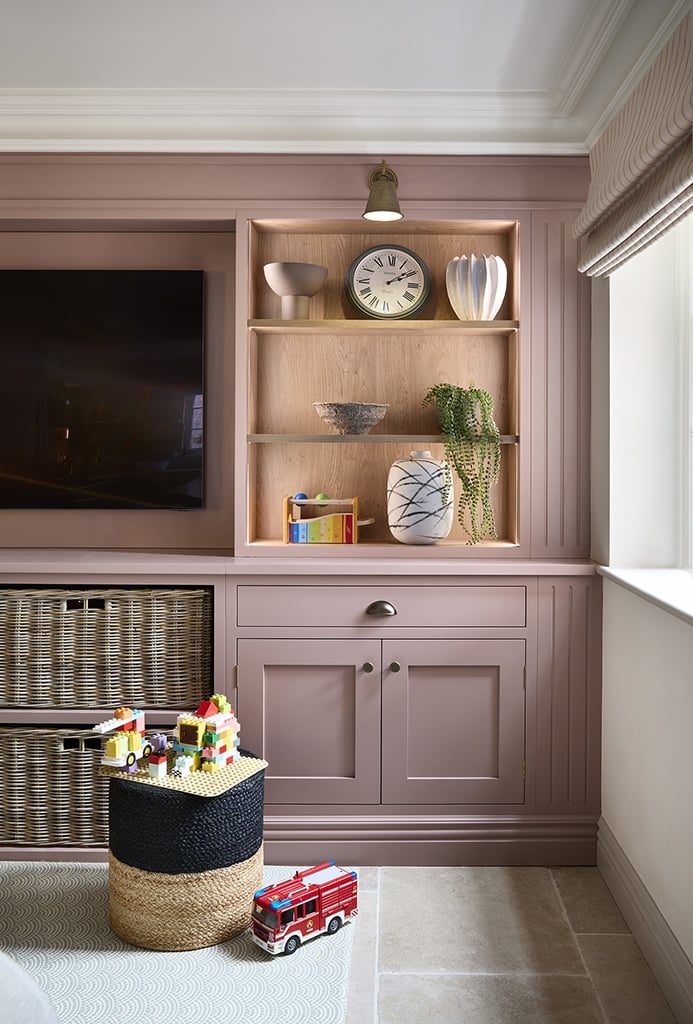
One of limestone’s greatest strengths is its design flexibility. It can feel classic, contemporary, rustic, or architectural depending on the finish and format selected. Whether that expression comes through a refined honed limestone flooring surface, the soft rolled edges of tumbled limestone flooring, or the more modular character of limestone brick flooring, limestone adapts well across a wide range of styles, layouts, and indoor-outdoor spaces.
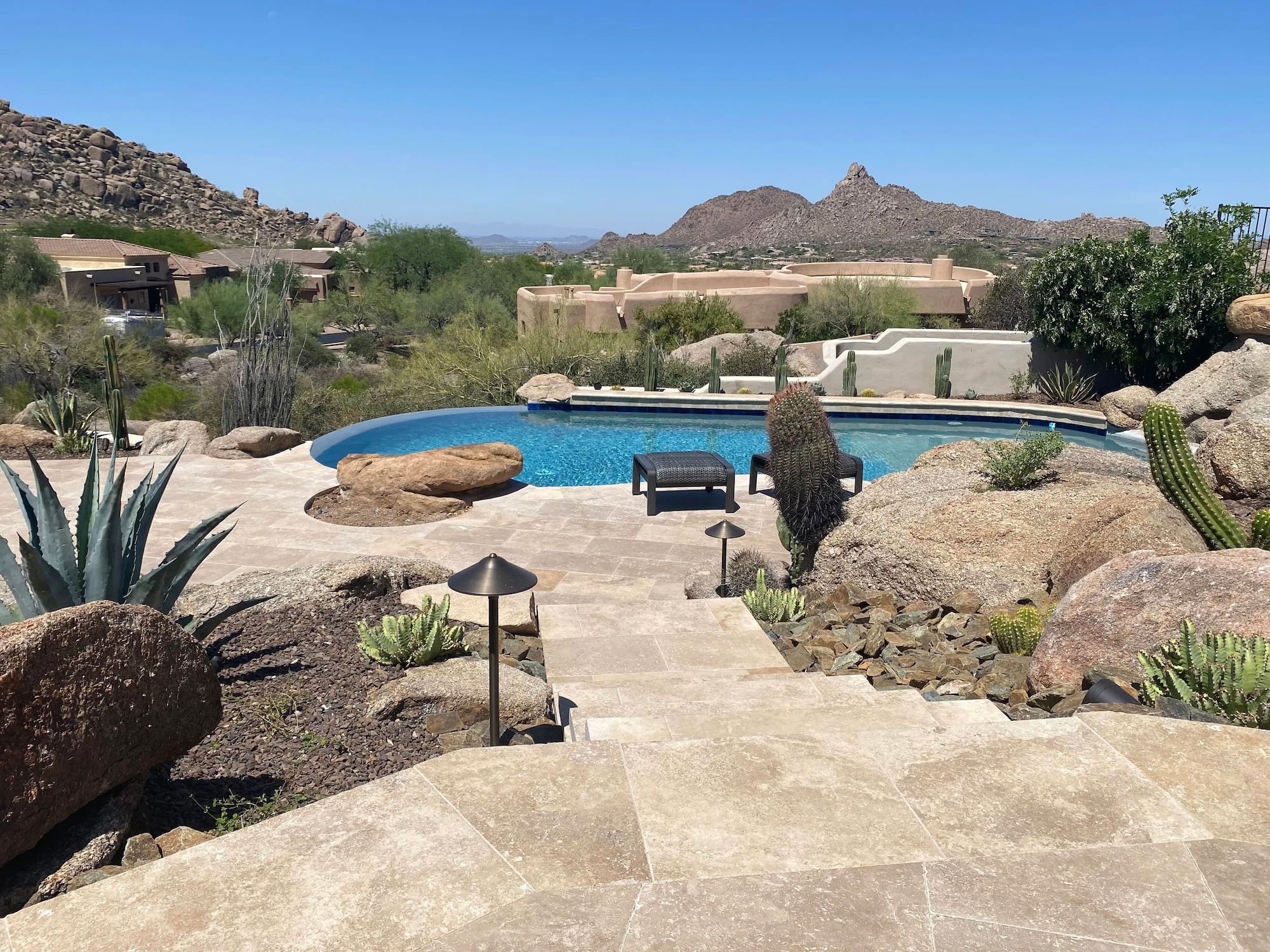
Travertine is one of the most recognizable natural stone flooring options, known for its warm earth tones, naturally textured surface, and relaxed, old-world appeal. It has long been used in both residential and architectural settings where a softer, more organic look is preferred over a highly polished or formal finish.
For flooring and exterior paving, travertine is especially popular in patios, pool surrounds, walkways, and indoor-outdoor living spaces where its natural character feels at home. It can also work well in interiors that lean rustic, Mediterranean, or casually elegant, making it a useful reference point for homeowners comparing warm-toned natural stone flooring materials.
One of travertine’s biggest strengths is the way it combines a weathered, timeless look with strong versatility across indoor and outdoor applications. Even if you are still comparing materials, travertine is an important stone to understand because it often serves as a benchmark when evaluating limestone and other warm-toned surfaces. If you are weighing the differences more closely, our guide to travertine vs limestone explores how the two materials compare in character, performance, and ideal use cases.
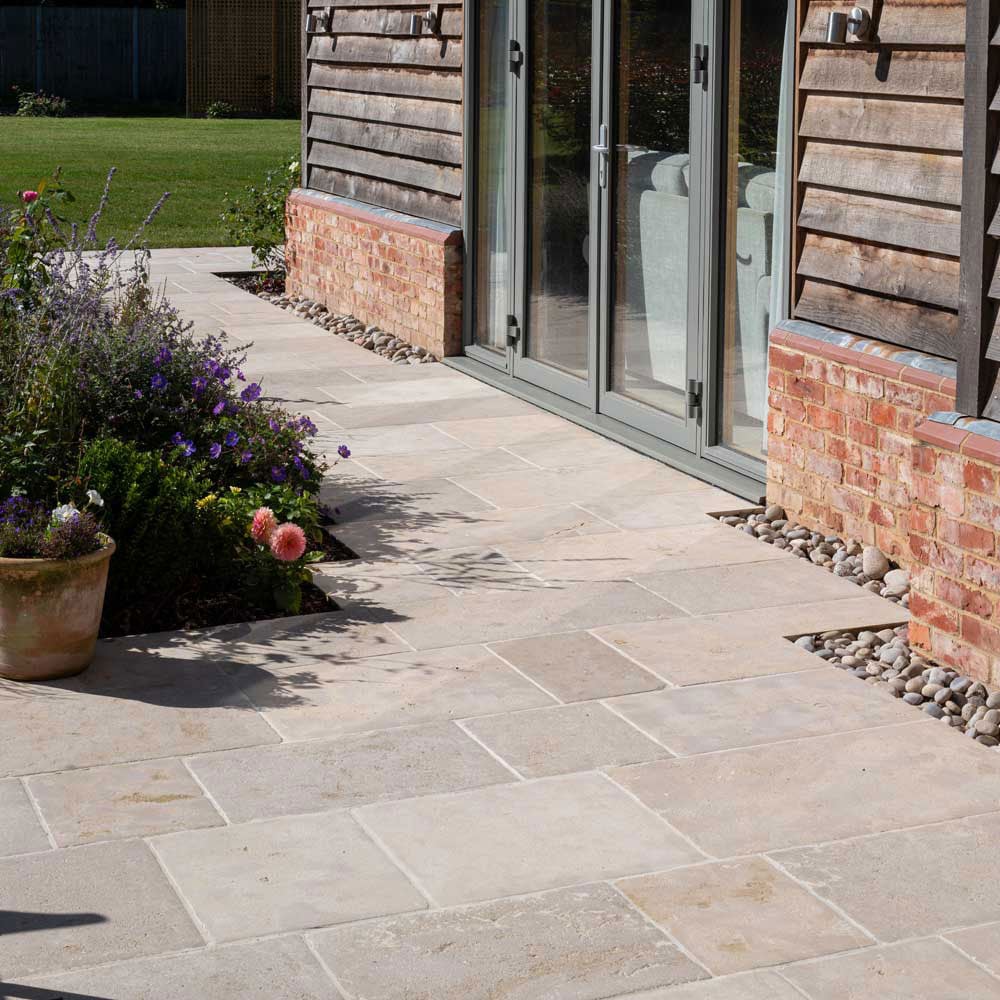
Sandstone is a natural choice for projects that call for a warm, relaxed, and organic look, especially in outdoor settings. Known for its earthy color variation and lightly textured surface, sandstone brings a softer visual character than many denser stones while still offering the timeless appeal that makes natural stone flooring so attractive.
For outdoor paving and flooring, sandstone is especially well suited to patios, pathways, pool surrounds, and other outdoor living spaces where natural texture and warm tones help create a more inviting environment. It can also work in interiors that lean rustic, casual, or nature-inspired, though it is most often appreciated for the way it helps connect the home to exterior spaces.
One of sandstone’s biggest strengths is its visual warmth. Its layered movement, understated texture, and easygoing character make it a compelling option for homeowners who want a stone floor that feels natural rather than formal. It is also frequently compared with limestone, since both materials share a timeless, earthy appeal but can create different effects depending on the project. If you are weighing those differences more closely, our guide to limestone vs sandstone explores how the two materials compare in character, performance, and ideal use cases.
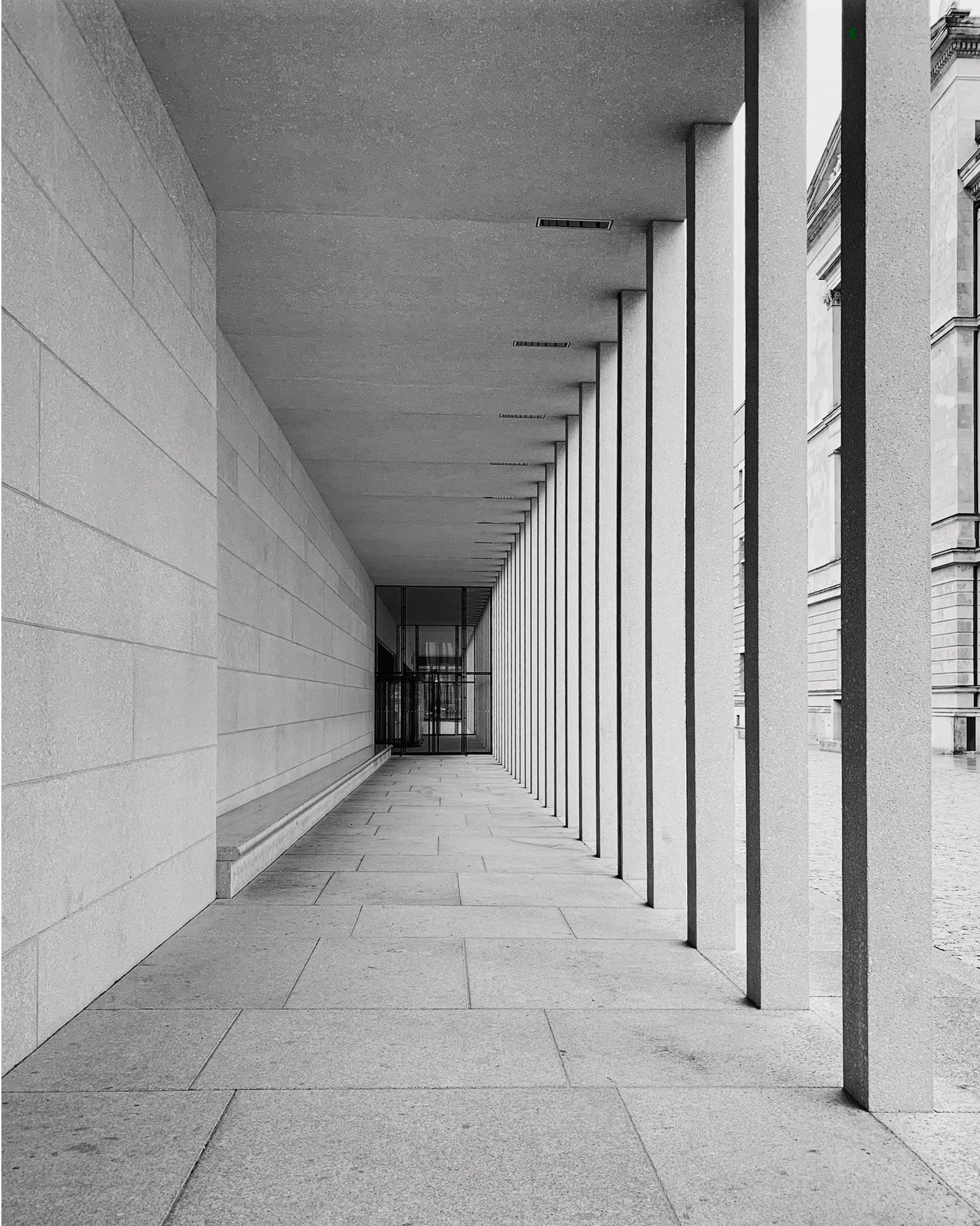
Granite is one of the hardest and most durable natural stone flooring materials, making it a strong option for applications where long-term performance is a top priority. Its dense composition and substantial feel give it a bolder, more structural character than many softer stones, which is part of what makes granite so appealing in the right setting.
For residential use, granite is more commonly selected for exterior paving applications, such as walkways, pathways, pool surrounds, and other outdoor areas needing a hard-wearing stone. It can also be used in commercial or very high-traffic environments where durability matters more than softness or warmth. In those contexts, granite offers a reliable combination of strength, weather resistance, and visual permanence.
One of granite’s greatest advantages is its ability to stand up to demanding conditions while still delivering a natural, high-end look. For homeowners comparing stone flooring options, granite is less about softness or subtlety and more about choosing a material with serious durability, especially for exterior spaces where resilience and longevity matter most.
Quartzite is a high-performance natural stone flooring material valued for its strength, visual movement, and refined surface character. It often appeals to homeowners who want something with the durability of a harder stone but with a cleaner, more elevated look than more rugged materials.
For flooring, quartzite works well in high-traffic areas where resilience matters, while still offering a more polished and design-forward appearance. It can suit both contemporary and classic spaces depending on the color and finish selected, making it a useful option for homeowners who want durability without giving up visual sophistication.
One of quartzite’s biggest strengths is the balance it offers between performance and aesthetics. Its dense composition, natural variation, and crisp visual texture make it a compelling choice for projects where the goal is a stone floor that feels durable, architectural, and quietly luxurious.

Slate is a distinctive natural stone flooring option known for its textured surface, layered character, and naturally slip-resistant feel. It has a more rugged and dramatic appearance than many other stone flooring materials, which makes it especially appealing in spaces where texture and visual depth are part of the design goal.
For flooring, slate is often used in bathrooms, mudrooms, entry areas, and other settings where grip underfoot is important. Its natural cleft surface can make it a practical choice for wet areas or transitional spaces, while its darker tones and varied texture give it a grounded, architectural look that works well in both rustic and contemporary designs.
One of slate’s greatest strengths is the way it combines utility with character. Homeowners who want a natural stone floor with a more tactile surface and a stronger sense of movement often find slate appealing, especially when compared with smoother, more uniform materials. It remains an important option in the broader natural stone flooring category for projects where slip resistance and texture are key priorities.
While marble, limestone, travertine, sandstone, granite, slate, and quartzite make up many of the most important natural stone flooring categories, they are not the only options available. Some other stone flooring materials are used more selectively, either because they are more specialized in appearance, better suited to accent applications, or less common in everyday residential flooring projects.
Onyx is one of the most visually dramatic natural stone flooring materials, known for its striking veining, translucency, and bold color variation. It is typically chosen for spaces where visual impact matters more than broad everyday practicality, making it a more specialized option within the wider natural stone flooring category.
For flooring, onyx is most often associated with luxury interiors, statement spaces, and highly design-driven applications. Its appeal comes from its unique appearance and the sense of exclusivity it brings, rather than from the kind of broad versatility offered by more commonly used flooring stones.
Because onyx is typically considered a more niche material, it is not as central to most natural stone flooring projects as marble, limestone, or travertine. Still, it remains an important stone to recognize, especially for homeowners exploring the more decorative and high-impact end of the category.
Pebble stone flooring offers a very different look and feel from cut stone tile or paver formats, bringing a more organic, textured, and tactile surface into a space. It is often used where a natural, spa-like, or highly casual look is desired rather than a formal architectural finish.
For flooring, pebble stone is most commonly seen in bathrooms, shower areas, garden paths, and certain outdoor applications where texture and slip resistance are part of the appeal. Its distinctive surface creates visual interest and a more handcrafted feel, which can work well in the right design context.
While pebble stone flooring is more specialized than many of the primary stone flooring types, it still plays a role in the broader conversation around natural stone flooring. It is best understood as a niche option for projects where texture, informality, and a closer connection to natural materials are the priority.
The type of stone you choose is only part of the equation. Finish and format also have a major impact on how a floor looks, feels, and performs underfoot. Some finishes are designed for refined interiors, while others are specifically chosen for exterior spaces where slip resistance, texture, and durability are critical. Understanding these differences can make it much easier to choose the right natural stone flooring for your project.

A honed finish creates a smooth, refined surface with a matte or low-sheen appearance. In natural stone flooring, this look is most often associated with elegant interior spaces where a clean, tailored, and understated aesthetic is preferred. Honed finishes highlight the natural beauty of the stone without the reflectivity of a polished surface, which is why they are often favored in more contemporary or architectural interiors.
For flooring, honed finishes are generally best suited to interior applications rather than wet exterior spaces, where slip resistance standards are more demanding. If you are drawn to a quieter and more refined look indoors, our honed limestone flooring collection is a strong example of how this finish can bring softness and sophistication to a space.
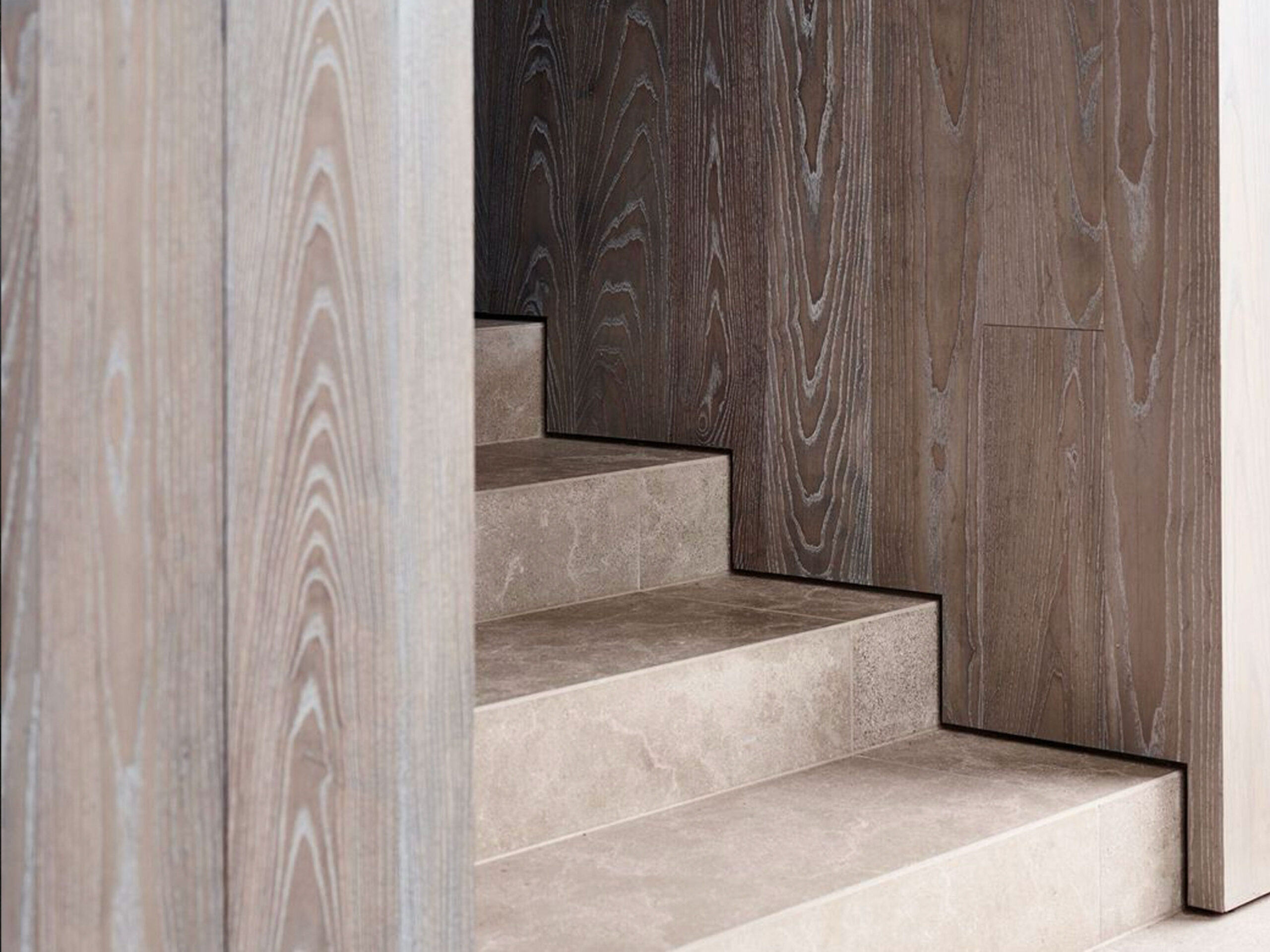
Cashmere is Surface Shop’s proprietary dual-finish system designed to deliver a refined surface appearance while still meeting slip resistance requirements for both interior and exterior flooring applications. That combination makes it especially compelling for projects that want the elegance of a more tailored finish without giving up the practical performance needed for outdoor living spaces.
For homeowners seeking continuity between interior and exterior design, Cashmere flooring offers a distinctive solution that bridges both worlds. It is especially effective in spaces where a softer visual finish is desired but traditional honed flooring would not be appropriate outdoors.
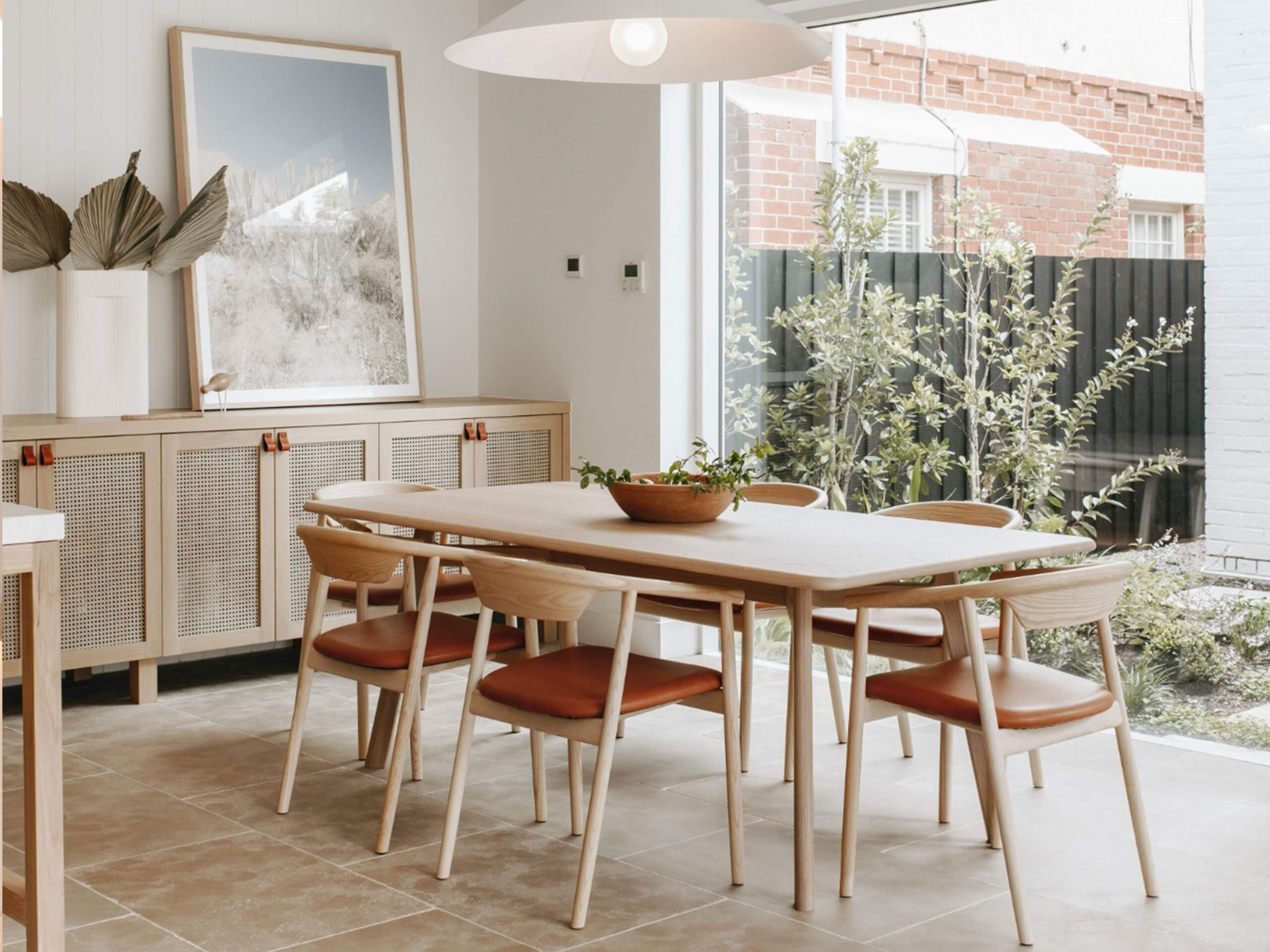
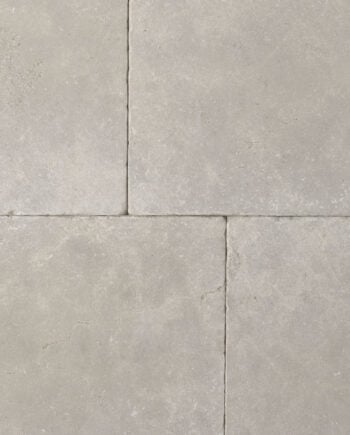
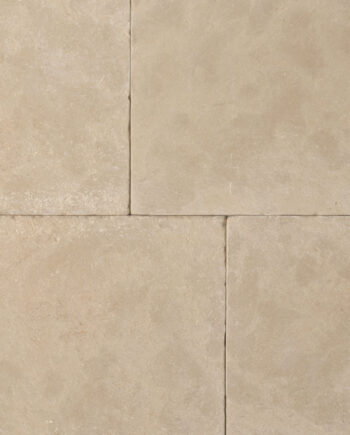
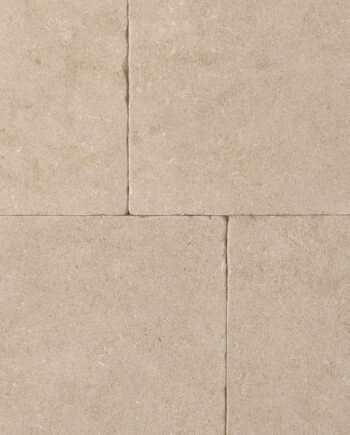
A tumbled finish gives stone a softer, more aged appearance by rounding edges and subtly weathering the surface. This finish is often associated with a warmer, more relaxed look and works especially well in spaces that lean rustic, Mediterranean, old-world, or indoor-outdoor in character. Tumbled stone flooring can feel more informal than honed material while still maintaining the timeless appeal of natural stone.
For projects that call for texture and a more lived-in sense of character, tumbled limestone flooring is one of the clearest ways to bring that style into a space.
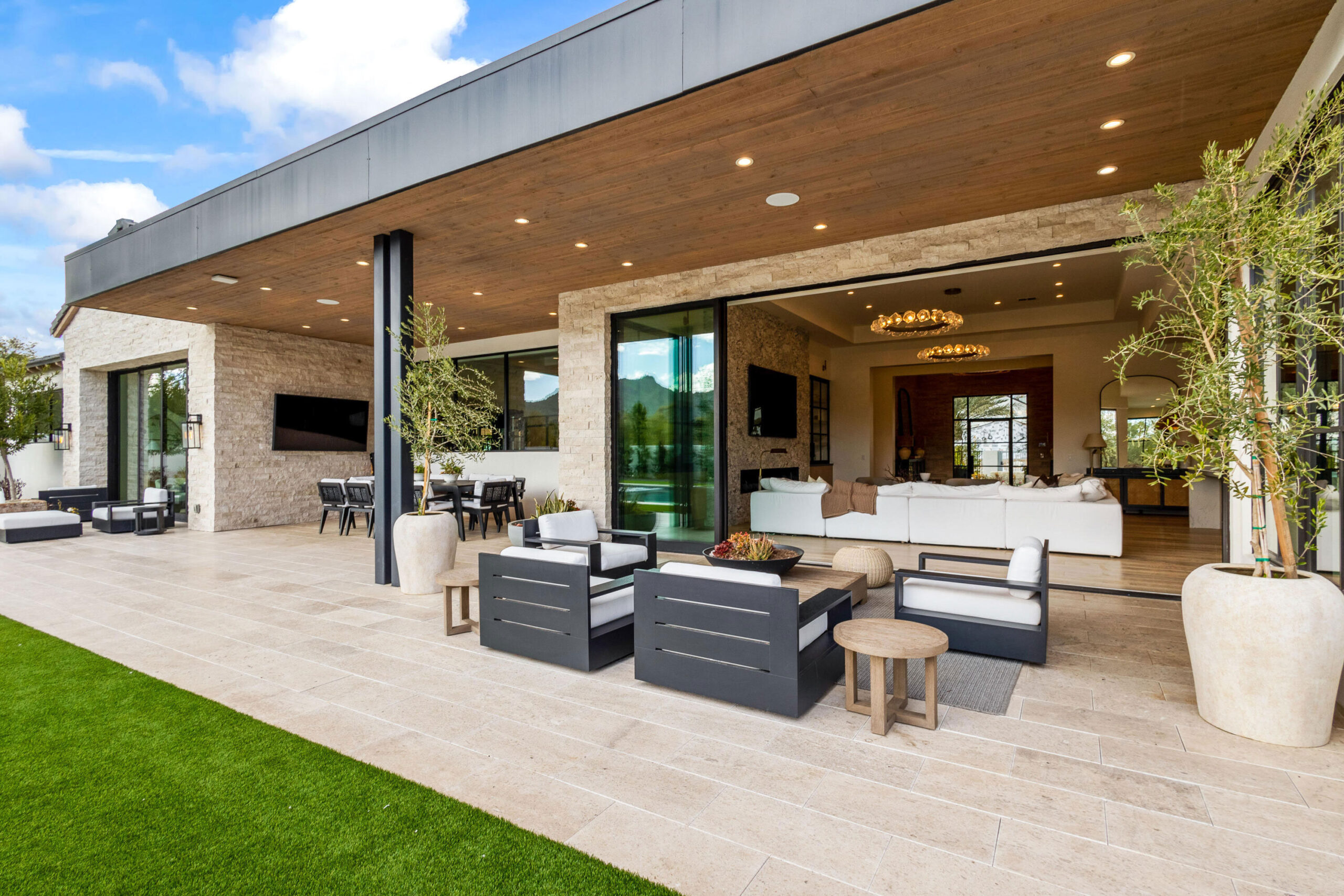
A brushed finish gives stone a gently textured surface that helps improve slip resistance while still preserving much of the color depth and visual softness often associated with honed material. This makes it especially appealing for homeowners and designers who want a refined look but need better performance in exterior environments.
Brushed stone flooring is popular in patios, pool surrounds, courtyards, and other outdoor spaces where the balance between elegance and practicality matters. It offers a more relaxed, tactile feel than honed stone while still maintaining a premium appearance.
A leathered finish adds subtle texture to the surface of the stone while maintaining a refined and finished appearance. It offers more grip than a smoother interior finish and can work well in both interior and exterior applications depending on the material and setting.
Leathered stone flooring is popular when the goal is to create a surface that feels tactile and substantial without appearing overly rustic. It can be a strong option for projects that want a balance of elegance, texture, and improved underfoot performance.
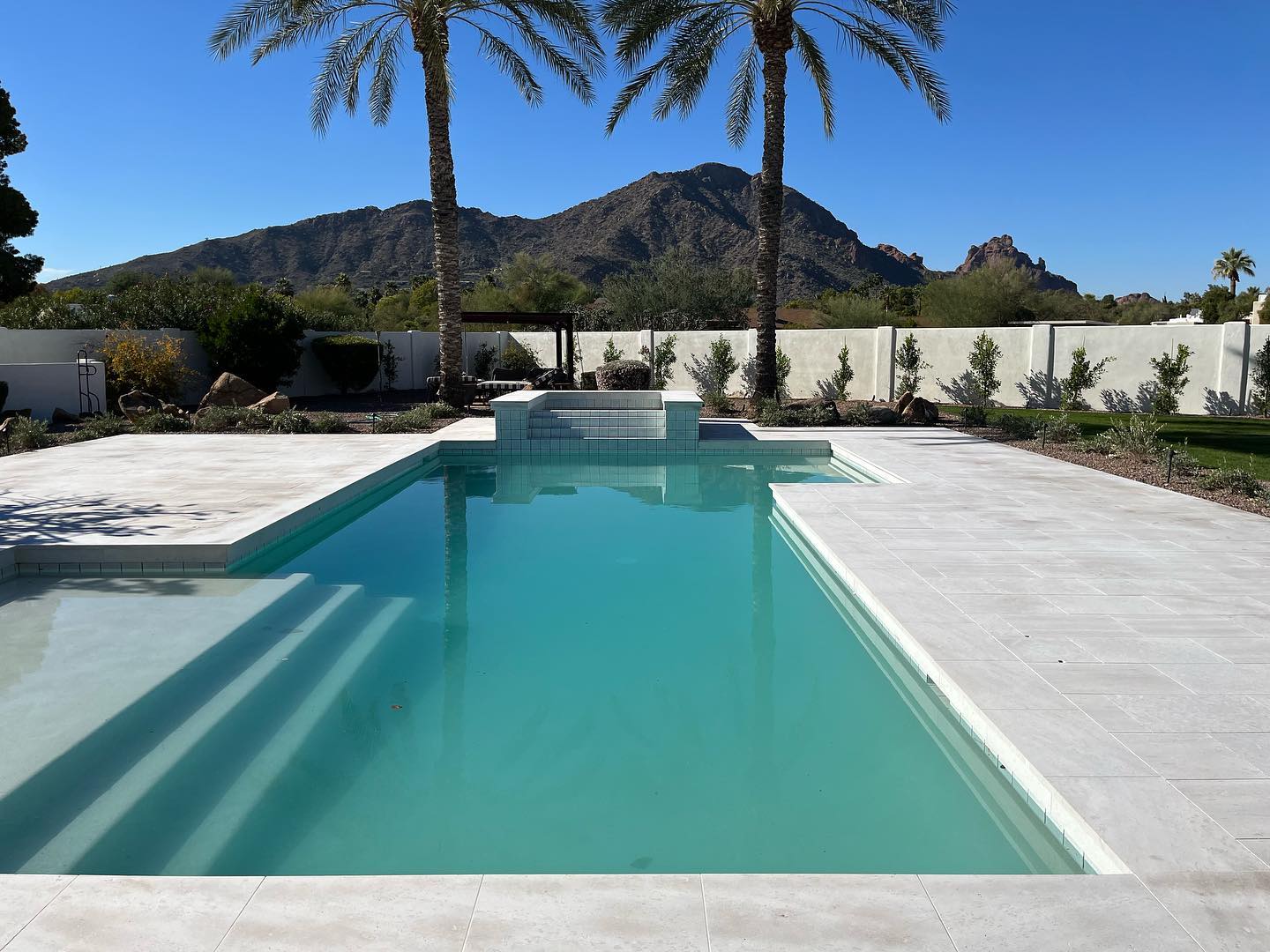
A sandblasted finish creates a lightly textured surface by abrading the face of the stone. This process improves slip resistance while also softening some of the darker or denser visual characteristics found in certain materials. The result is often a more muted and relaxed appearance that performs well in exterior settings.
Sandblasted stone flooring is especially useful for patios, pathways, and poolside applications where a cleaner finish is desired but safety and traction remain essential.
Shotblasted stone flooring is similar in concept to sandblasting, but uses a heavier blasting medium to create a more pronounced surface texture. This produces a stronger grip underfoot, making it well suited to spaces where slip resistance is a top priority.
Because of its more robust texture, shotblasted stone flooring is often best suited to demanding exterior applications such as pathways, courtyards, pool surrounds, and other areas exposed to moisture or heavy use.
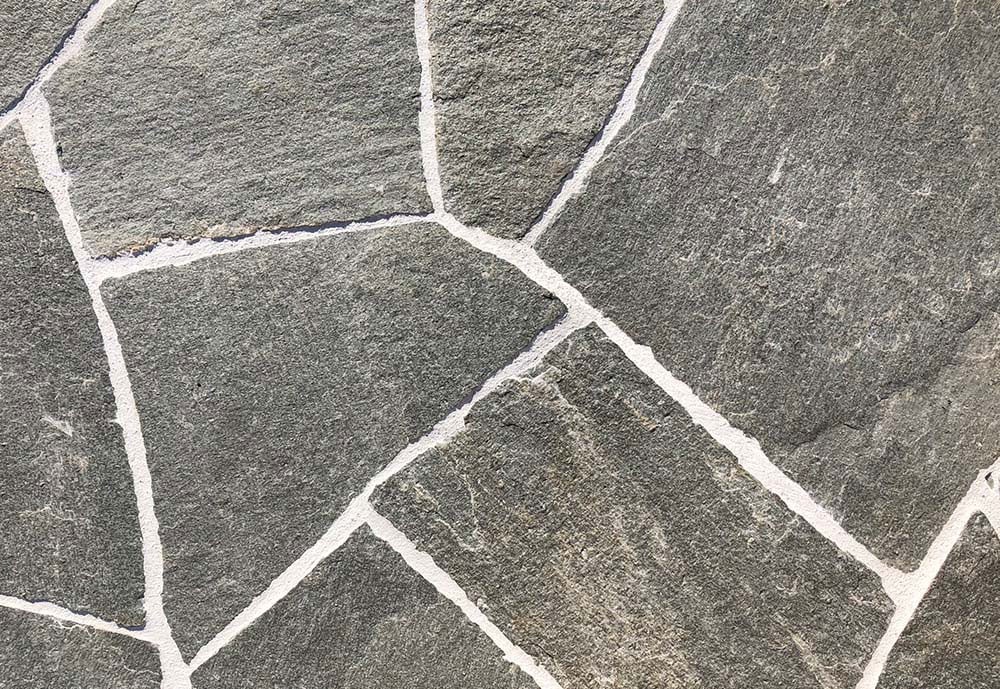
A split stone natural finish preserves the rough, irregular surface character created when the stone is naturally cleft or split. This finish is especially common in materials such as slate and porphyry, where the natural surface texture is part of the stone’s visual appeal.
For flooring, split stone finishes bring a more rugged, old-world character to a space and are often chosen where authenticity, texture, and strong grip are more important than refinement. They are particularly effective in rustic interiors, outdoor applications, and architectural spaces with a more traditional or natural feel.
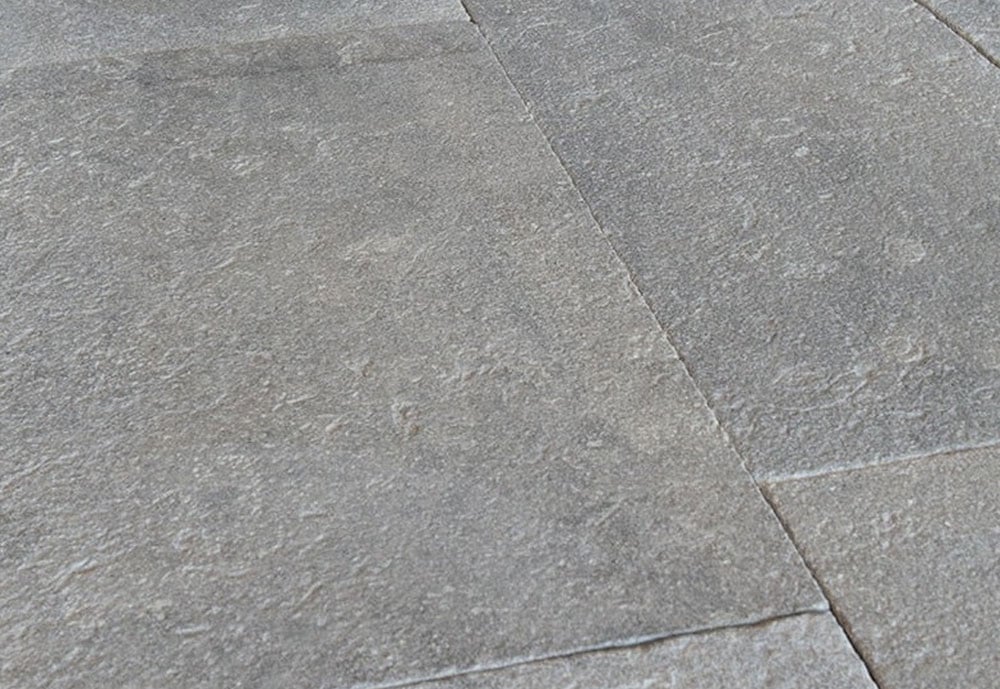
A flamed finish is created by exposing the stone surface to intense heat, which produces a heavily textured and slip-resistant finish. This treatment is especially common in materials such as bluestone and basalt, where it creates an elegant but highly practical surface for exterior use.
Flamed stone flooring is ideal for driveways, courtyards, gardens, pool surrounds, and pathways where durability and traction are essential. It is one of the strongest finish options for projects that demand both performance and a more elevated architectural appearance.
Format plays just as important a role as material and finish when it comes to the overall look of a natural stone floor. The same stone can feel formal, rustic, architectural, or historic depending on whether it is installed in large monolithic pieces, repeating brick modules, patterned layouts, or variable free lengths. Choosing the right format helps shape the visual rhythm of the space and can dramatically influence how traditional or contemporary the finished floor feels.
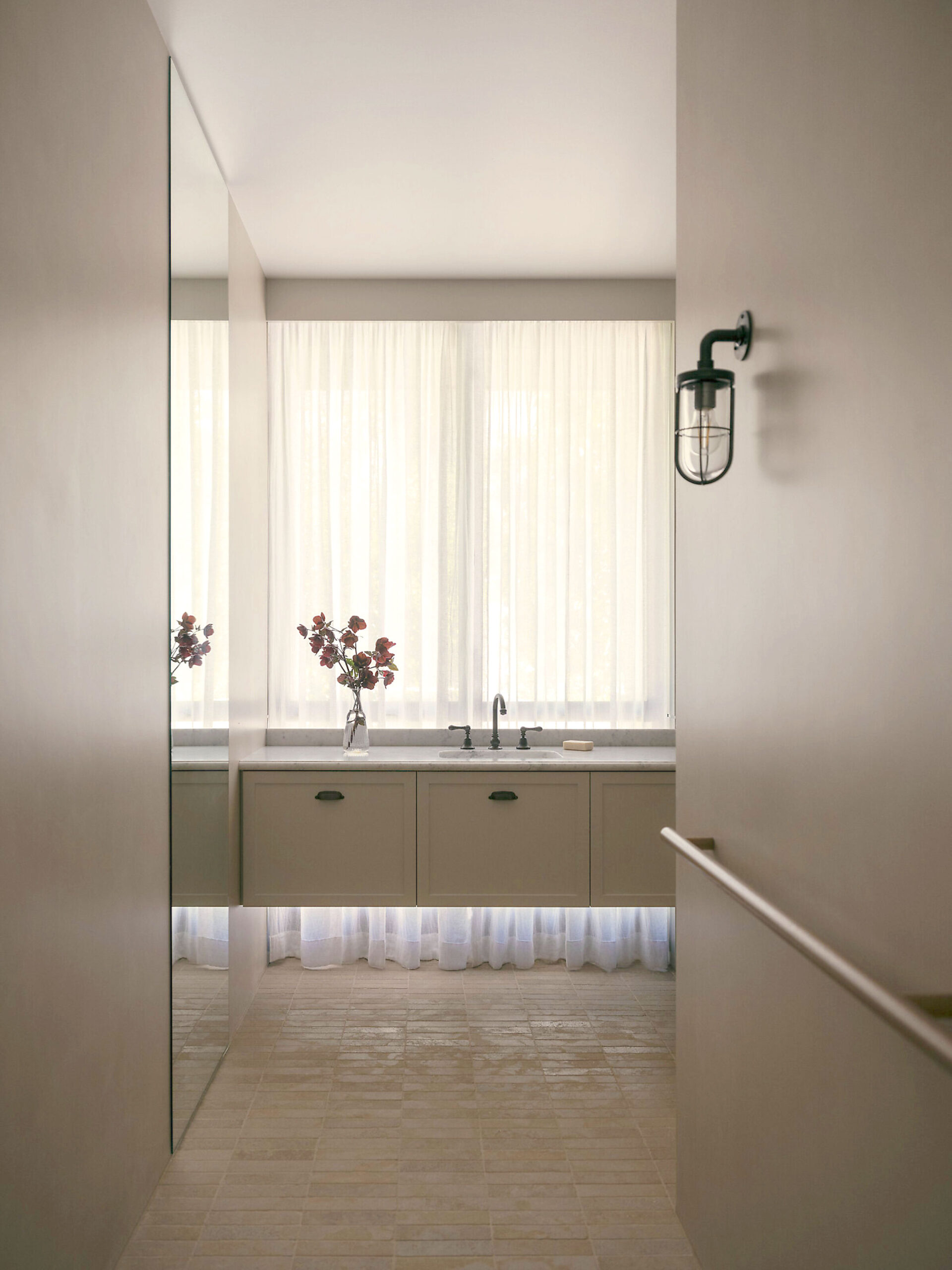
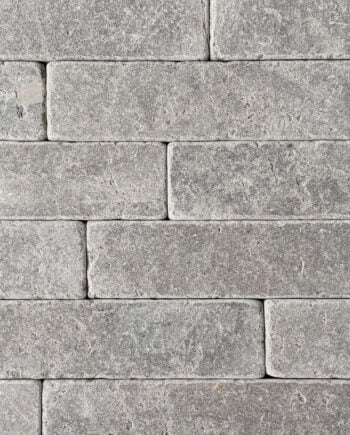
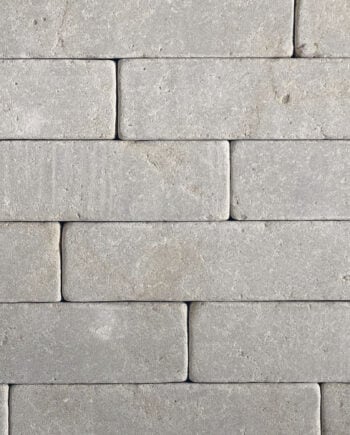
Brick format stone flooring creates a more modular, architectural look that feels classic, grounded, and often slightly old-world in character. It is especially versatile because brick can be used in both interior and exterior applications, whether installed as tile over a slab or as 3 cm pavers set in sand. That flexibility makes brick format one of the most adaptable ways to bring natural stone into a project.
Bricks are most commonly seen in a tumbled finish, which enhances their aged, timeworn character and helps them feel more relaxed and authentic underfoot. They can be installed in straightforward running bond layouts, but they become especially striking in a herringbone pattern, where the format takes on a more elevated and visually dynamic appearance. Cobbles, which are typically 4×4, are used in much the same way and offer a similarly timeless, modular character at a slightly smaller scale.
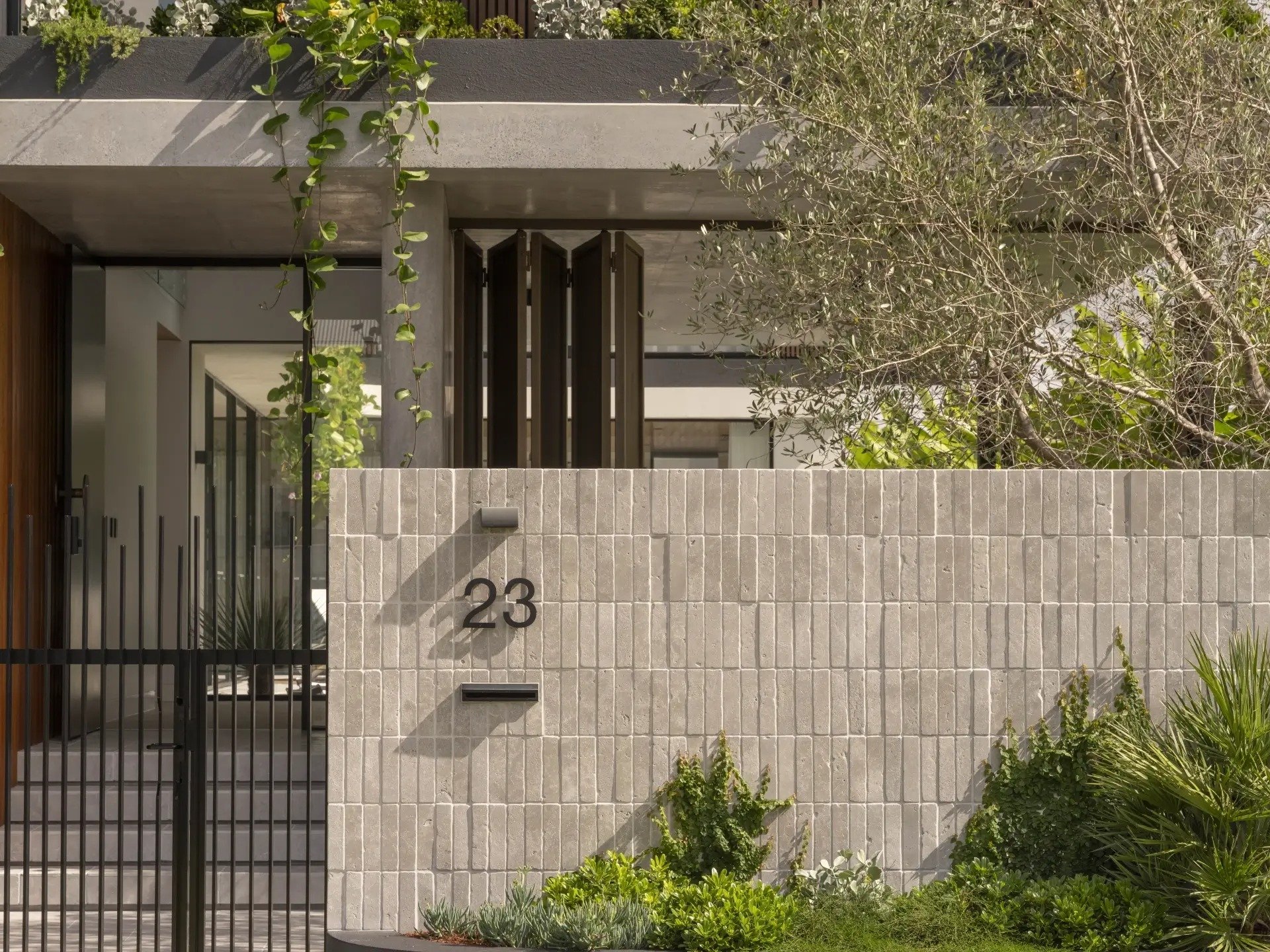
Brick and cobble formats are often used in laundry rooms, as borders around living spaces, in transitions between indoor and outdoor areas, and across entire patios or exterior entertaining surfaces. Another major advantage of brick and cobble is how often they are incorporated into larger layout systems. They are frequently used as borders, insets, and design accents within monoformat and French pattern floors, helping delineate spaces and add architectural detail to the overall installation. If you are exploring this style, limestone brick flooring is a strong example of how brick format can add texture, pattern, and structure to a natural stone floor.
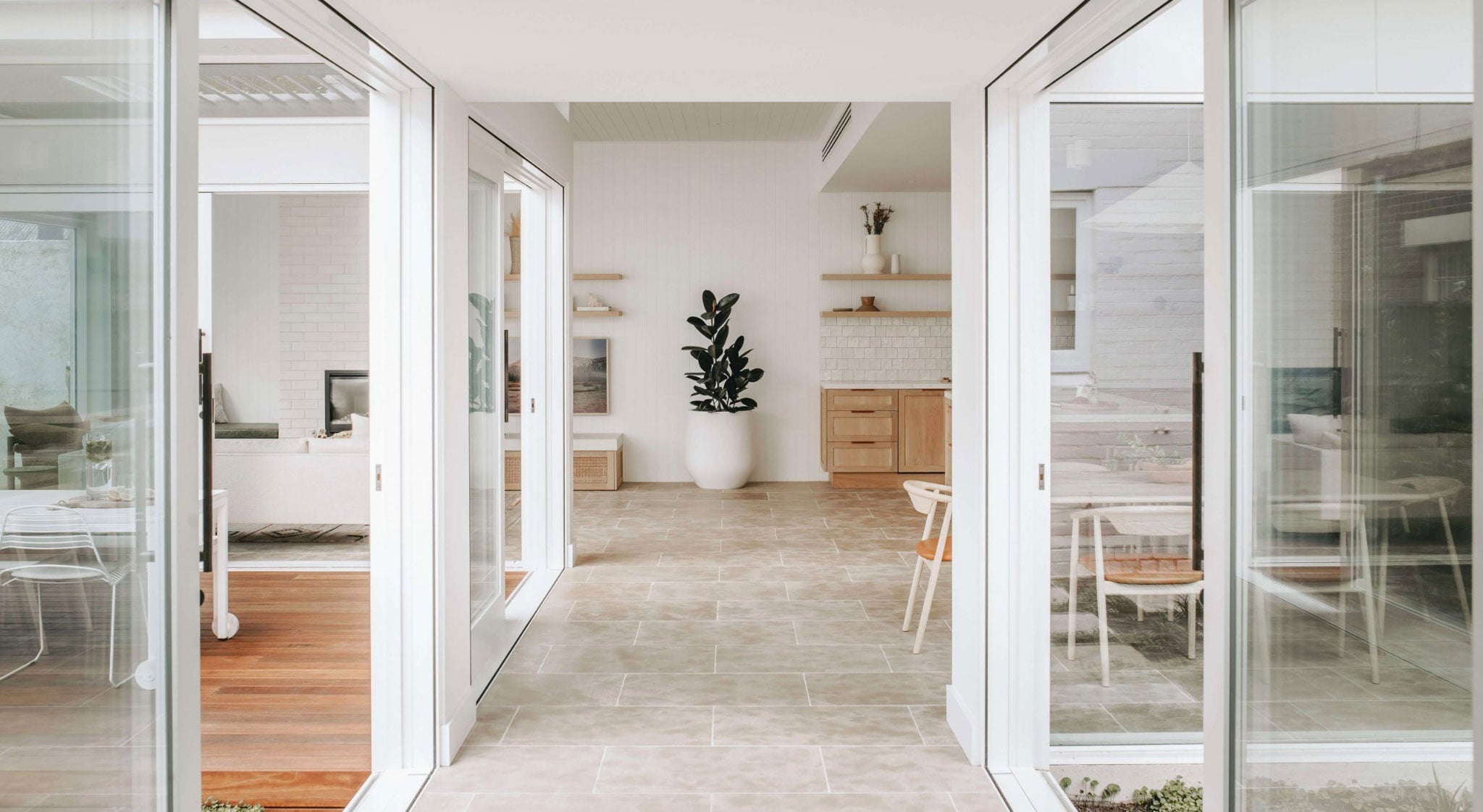
Monoformat stone flooring uses a consistent tile size throughout the installation, creating a cleaner and more stately visual effect. This format is especially effective when the goal is simplicity, order, and a more architectural presentation. In natural stone flooring, larger monoformat sizes such as 16×24, 16×32, and 18×36 are especially popular because they help spaces feel more expansive, open, and intentional.
Monoformat layouts are used extensively in architectural environments, both interior and exterior, and are especially effective when the design goal is to create visual continuity between indoor living spaces and adjacent outdoor areas. Because the repeated size creates less pattern interruption, the eye reads the floor more continuously, which can make larger rooms, patios, and connected indoor-outdoor environments feel calmer and more refined.
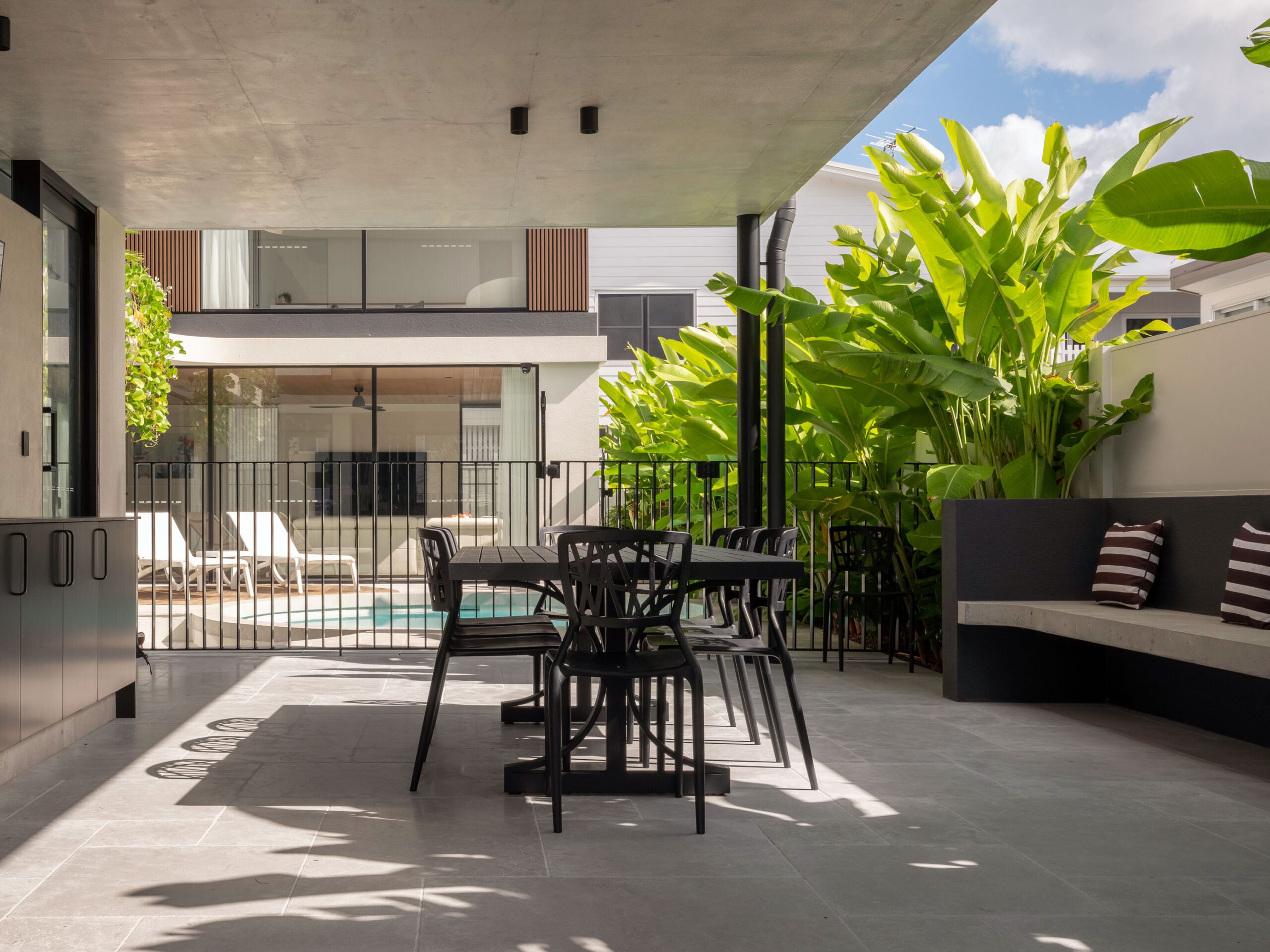
French pattern stone flooring, also known as the Versailles pattern or Ashlar pattern, uses a repeating combination of multiple tile sizes arranged in a traditional layout that feels warm, elegant, and highly established. This format is especially common with travertine and other classic natural stones, where it helps create a sense of movement and timeless European character.
French pattern layouts come in numerous variations, but they all share the same core advantage: they bring more visual richness and old-world sophistication than a single-size installation. They are often used in kitchens, pool decks, and patios, where the goal is to create a floor that feels detailed, layered, and historically rooted.
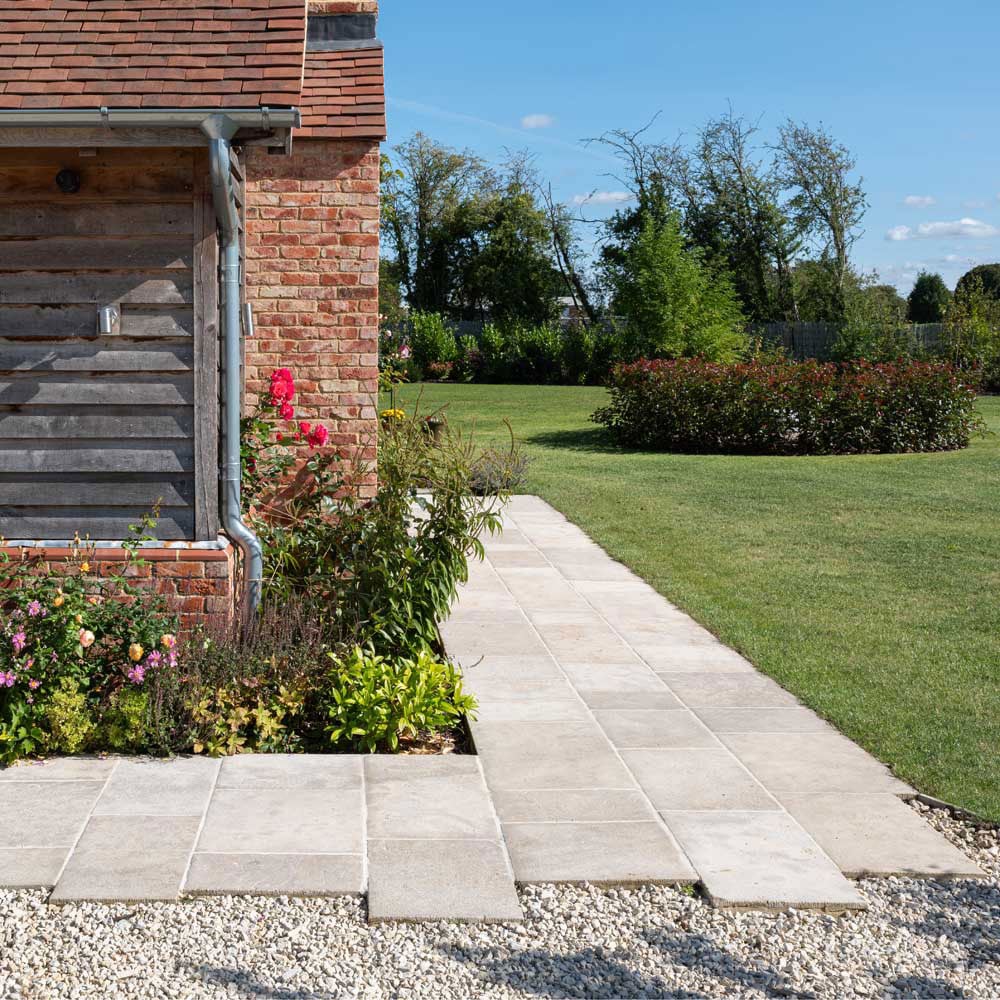
Free length stone flooring uses pieces of varying lengths to create a more organic and historically grounded look. This format is especially common in sandstone and other materials where a less uniform, more natural layout is desired. Compared with more ordered flooring systems, free length installations often feel more relaxed, storied, and authentic.
Free length flooring can work especially well in kitchens, living rooms, patios, and pool decks, where a more natural and less rigid layout adds warmth and character to the space. At the same time, it is typically one of the more difficult formats to install well. Because it often does not follow a fixed pattern, the installer must use a trained eye to build a layout that feels balanced and visually natural across the space. When done well, the result can be one of the most beautiful and organic-looking expressions of natural stone flooring.
Once you have a better sense of which material, finish, and format fit your project best, the next step is narrowing down the right collection. Whether you are looking for a refined interior floor, a more textured indoor-outdoor surface, or a modular layout with old-world character, exploring by style can help connect inspiration to the right product direction.
Some of the most common types of natural stone flooring include marble, limestone, travertine, sandstone, granite, slate, and quartzite. Each material has its own look, texture, level of durability, and ideal use case, which is why the best choice often depends on whether the space is indoors, outdoors, or part of a connected indoor-outdoor design.
Natural stone tile flooring is typically thinner and most often installed over a concrete slab or other prepared substrate, especially in interior applications. Stone pavers are thicker and are generally used in exterior paving applications such as patios, walkways, courtyards, and pool decks, where they may be installed over slab or set in sand depending on the project and material.
The best stone for floors depends on the application and the overall style you want to achieve. Marble is often chosen for elegant, high-end spaces, limestone is valued for its versatility and soft natural character, travertine and sandstone are popular for warm-toned outdoor areas, and granite or quartzite are often selected where durability is a top priority.
Granite and quartzite are generally among the easier natural stone flooring materials to maintain because of their strength and durability. That said, proper sealing, routine cleaning, and selecting the right finish for the environment all play an important role in keeping any natural stone floor looking its best over time.
Marble, granite, and quartzite are all highly durable natural stone flooring materials when properly selected and installed for the right application. Granite and quartzite are especially known for their hardness, while marble can also offer excellent long-term performance in both interior and exterior flooring environments.
Yes, natural stone flooring can work very well in kitchens when the right material and finish are selected. Honed or textured finishes are often preferred depending on the look and performance needed, and materials such as limestone, marble, slate, granite, and quartzite can all be used successfully in kitchen environments.
Marble is one of the most popular natural stone flooring choices for bathrooms because of its density and relatively low porosity, especially in a honed finish. It offers a refined look while performing well in wet interior environments when properly selected and installed.
Slate can also be a strong option for bathrooms because its naturally textured surface offers good slip resistance. However, slate is more absorptive than marble and should be properly sealed, especially in spaces where exposure to moisture, oils, and bath products is frequent.
Textured finishes are usually the best choice when slip resistance is a priority. Materials and finishes such as slate, brushed stone, leathered stone, sandblasted stone, shotblasted stone, split stone natural finishes, and flamed finishes are often preferred in areas where moisture, weather exposure, or wet foot traffic are concerns.
Cost can vary significantly depending on the material, finish, format, thickness, and installation method. In many cases, limestone, travertine, and sandstone can provide a strong balance of value and visual appeal, but the total project cost depends just as much on layout complexity and installation requirements as it does on the stone itself.
The best limestone flooring finish depends on where the material will be used and the style you want to achieve. Honed limestone is often preferred for refined interior spaces because of its smooth surface and understated look. Tumbled limestone flooring is a strong choice when you want a softer, more relaxed character, with rolled edges and an easy elegance that works beautifully in both classic interiors and outdoor spaces. For projects that call for a more modern appearance across both interior and exterior applications, Cashmere flooring offers a straight-cut edge profile with a lighter color and texture expression, while still meeting slip-resistance requirements. You can also explore our tumbled limestone flooring collection for a more aged and textured look.
Yes, limestone can work beautifully in both interior and exterior flooring applications when the right finish and format are selected. It is especially valued for its warm neutral tones, timeless look, and ability to adapt across living spaces, kitchens, patios, pool surrounds, and other indoor-outdoor environments.
Create stunning Natural Stone Floors using our award winning pallet of products. Contact a Surface Shop Pro today to get your samples and pricing.






At Surface Shop, we believe there is a story behind every surface. That’s why we created Surface Culture, an industry leading digital publication that covers a range of topics from How To Guides to Architectural Trends in the world of luxury architectural finishes Browse our articles to dial in your knowledge of how surfaces impact architectural design, or simply use them to get inspired. Either way, we hope you enjoy, and wish you well on your journey toward appreciating materiality in architecture.



What are you looking for?