We Serve Clients Nationwide, Call us at (855) 696-9802 to Reserve Your Samples Today
Your Materials Inspiration
Starts here.
Surface Shop is an expansive purveyor of exquisite natural stone products from around the globe. Whether you’re brushing up on the difference between marble and limestone on Surface Culture, our wide-ranging blog, or working with one of our national distributors on a personal project, we’re excited you’re here.
How to Install Natural Stone Veneer on Exterior Walls
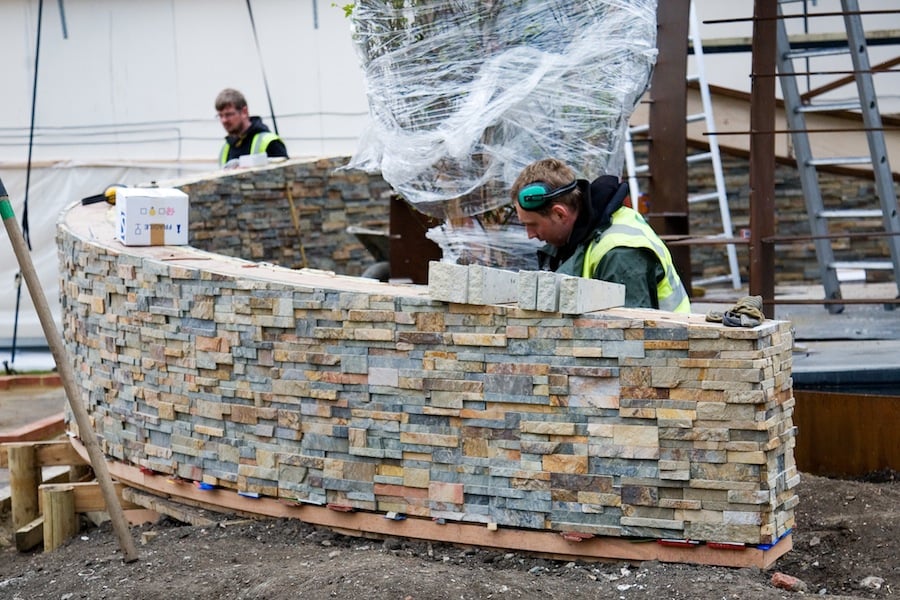
Ochre Blend Stacked Stone Rock Panels Installed Along a Radial Exterior Retaining Wall
You are here because you probably want to know how to install natural stone veneer on exterior walls without making mistakes. The good news is that the method isn’t hard to understand. But it is a detailed process with lots of steps to consider. The layout, surface prep, and moisture management are equally important as the stone itself.
Whether you’re working with an easy to install panel style system or more traditional loose masonry veneer, the same general concepts covered in this article apply and will serve you well when installing stone veneer on exterior walls. You’ll also learn what to verify in your local code and why it’s important to check your stone manufacturer’s instructions before you mix a single bucket of mortar.
Before You Start: Planning and Safety
Start with these two rules that will always end up saving you time, hassle, and money:
Always follow local building codes. Some local building codes might supersede International Building Code on elements like the height of an adhered stone installation or the clearance of a stone veneer above the finished grade level. Always check your local building codes and when appropriate, pull permits for your projects.
Follow manufacturer instructions. There are different types of panel systems, adhesives, and substrates that work best for different types of natural stone products. Surface Shop’s Installation Guides warns that the information they contain is specific to those specific products and not a generic guide for all types of stone. Always seek out the specific installation details for the product you are working on.
DIY vs Pro:
A DIY natural stone veneer installation is doable if the scope of the project is reasonable and the team has some basic tiling and masonry skills, but generally speaking professional installation is recommended, especially in the case of multi story walls, complex window flashing, moisture management or other highly detailed items.
Safety Isn’t Optional
Always use eye and ear protection, gloves and a dust mask when cutting.
When dry-cutting, the dust should be treated like the issue it is. Better still, wet-cut where feasible (clean and safe cuts).
Always foot ladders for safety and ensure scaffolding and lifts are properly balanced and stabilized.
How to Install Stone Veneer on Exterior Walls: Step-by-Step
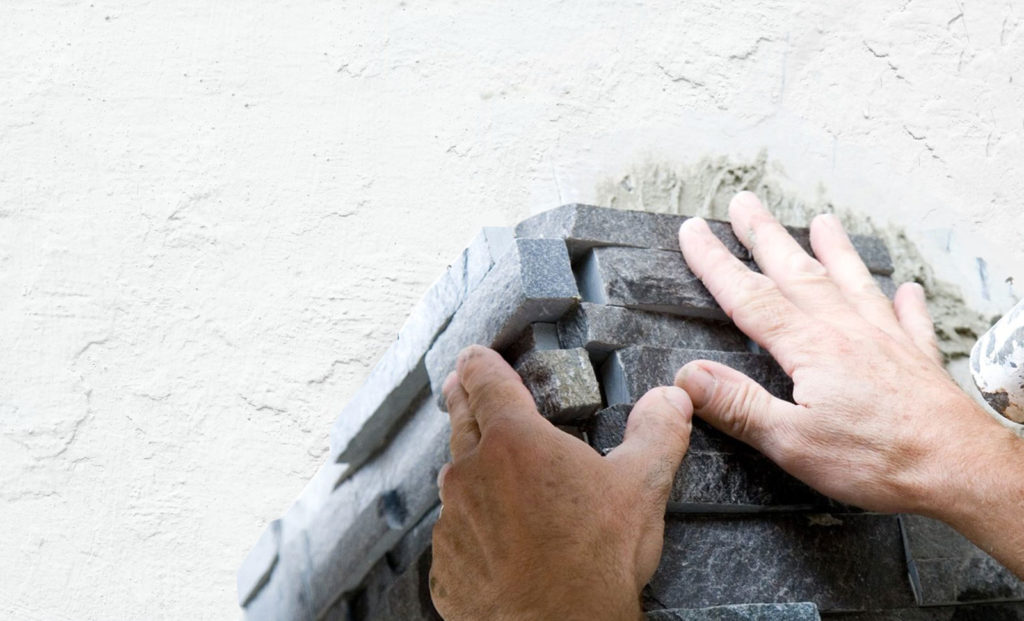
Whitsunday Ashlar Stone Cladding Corner Being Installed with Grout Joint
The general process of how to Install Natural Stone Veneer on Exterior Walls is listed below. Your specific products’ system might vary, such as recommending a particular adhesive or moisture management system, so always check your stone product manufacturer’s installation guide directly.
Step 1: Plan the Layout and Dry-Fit Panels
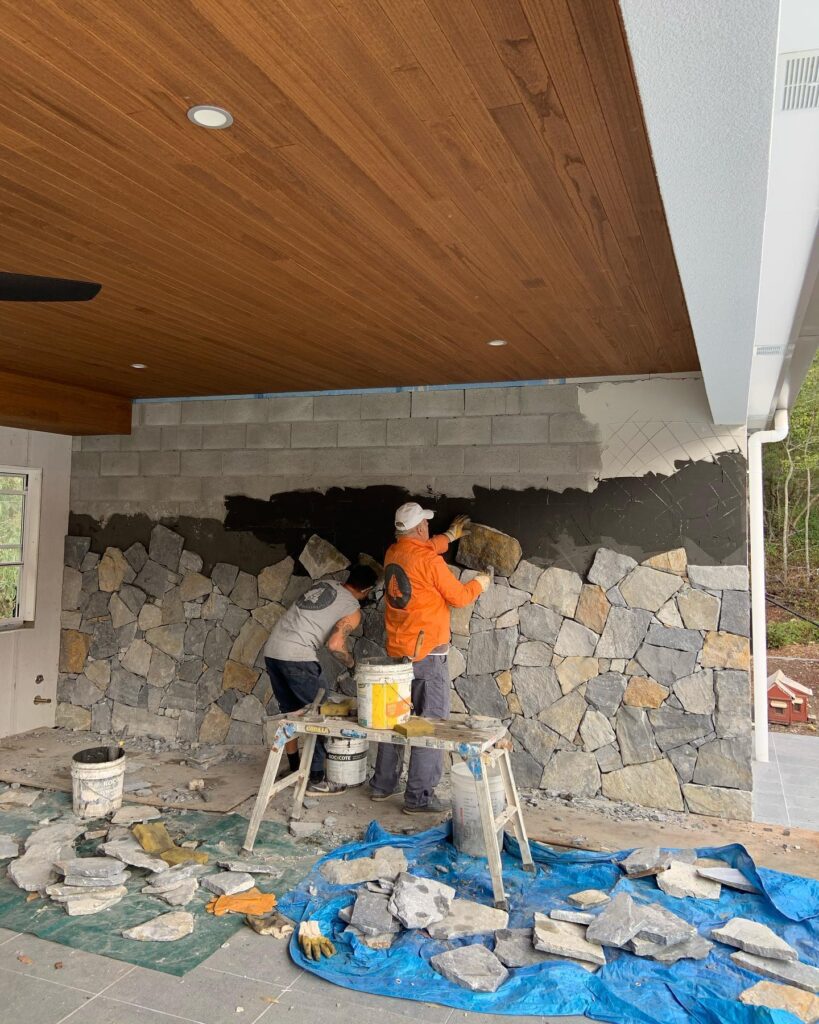
A Mason lays out Whitsunday Ashlar before Installing each Piece to Verify the Overall Look
Plan the appearance before actually getting anything up on the wall.
Pick your starting point. Typically, at some type of bottom corner or a striked chalk line. Plan for your corners and openings.
First, dry-fit a few Exterior Wall Panels on the ground to check the location of seams and not to leave small slivers at the end of the run in case the floor isn’t flat.
Take out several pieces of stone veneer from the boxes or crates they come in, fit them together to see how they come together on a flat surface. Check for color and batch variations and mix the stone on site accordingly.
Step 2: Prepare the Substrate and Apply Mortar or Adhesive
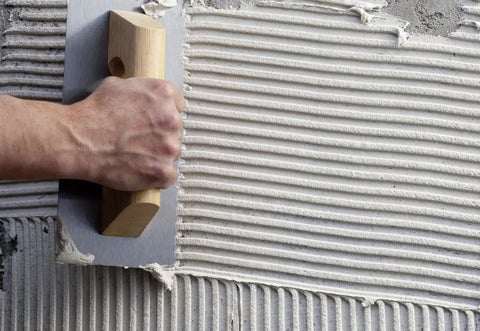
Using the Appropriate Trowel and Thinset is Critical to a Successful Exterior Installation
Stone veneer is only as good as the stuff that supports it. 99% of product issues with a natural stone veneer exterior wall installation has to do with a faulty installation and not faulty product.
Start with a Cementitious Substrate
Ultimately you are looking to get a water proofed cementitious substrate to bond your exterior stone veneer to. This can be achieved with a CMU or block wall or by covering a typical exterior wall assembly with cement board or a lathe and scratch coat. The cementitious substrate should be clean, untreated, and ready to bind.
Addressing Moisture Management
Moisture Management needs to be addressed in any exterior installation. It is important to rely on the stone veneer manufacturer’s recommendations with respect to this specific step. Treatments might vary from the installation of weep systems to roll on anti fracture / waterproofing membranes. Water is one of the most destructive forces on building materials and perhaps the biggest mistake you can make when installing natural stone veneer on exterior walls is not planning for it.
Selecting the Right Adhesive
A wide variety of adhesives are used for natural stone veneer installations on exterior walls ranging from S Type mortars to polymer modified thinsets. Consult the installation guide of manufacture of the stone veneer product being installed to select the correct adhesive and take care to work with the adhesive correctly, including mixing and working within the pot life of the product.
Step 3: Set the First Row of Stone
This is where projects either appear sharp or stay “drifty” indefinitely.
Make a level reference line by snapping or marking it.
Carefully put up the first row of exterior wall panels or stone pieces.
As you go, check the level. Small mistakes here turn into major ones higher up.
Step 4: Install Remaining Stone Veneer Exterior Wall Panels
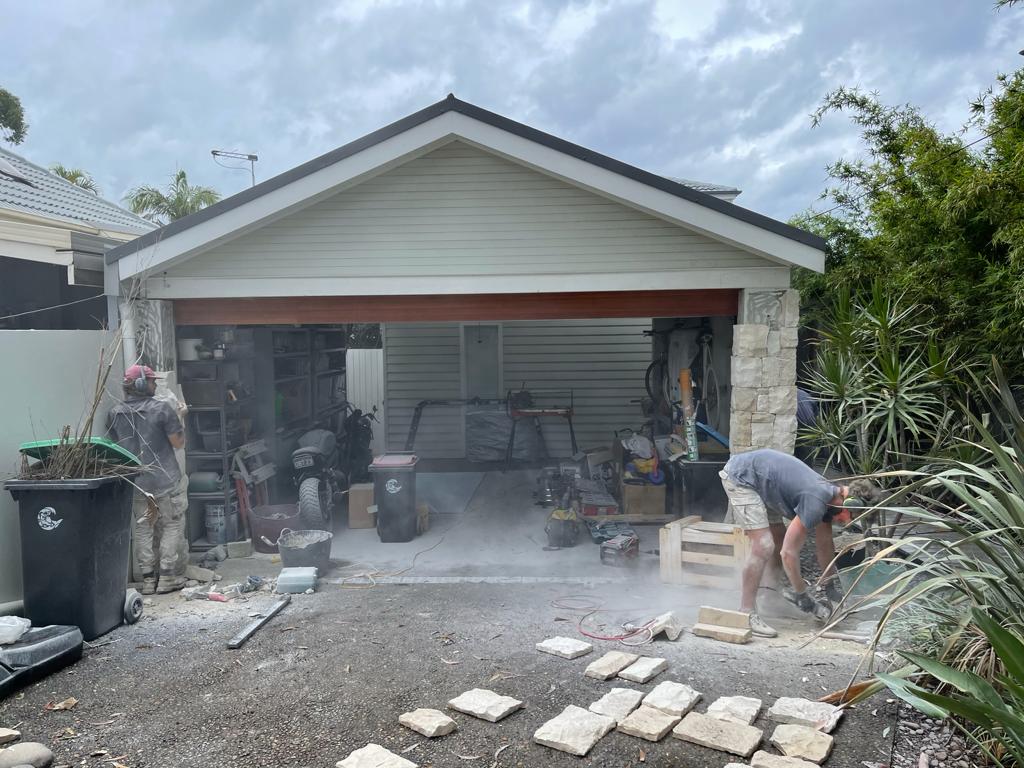
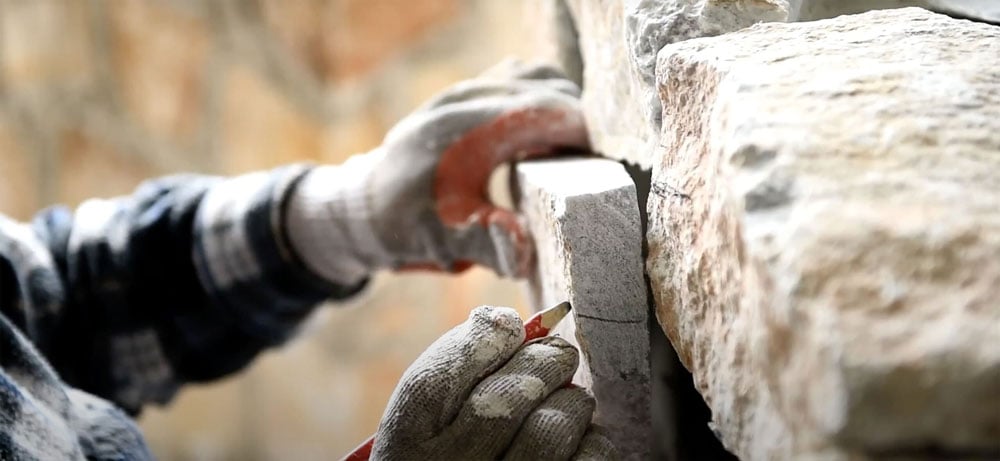
Master masons Rotate, Shape, and Chisel each piece of TerraForm before Applying the Cladding Up the Wall
You build up vertically now from the first row, but you keep an eye on your work like a pilot checks his instruments.
If installing a panel system, put the joints in a staggered pattern so that the seams don’t line up straight up and down.
To minimize noticeable batch difference in natural stone, mix panels and pieces from different boxes and crates.
Check the level and plumb every few panels, not just at the end.
The goal of a natural stone veneer system is to get the panels or pieces to fit together tightly and with clean seams.
Step 5: Cutting and Fitting Panels Around Openings and Corners
Closeup of Whitsunday Cut and Shaped around Entryway Window with Call Button
Corners and openings, whether it’s a window, door, electrical box or other obstacle are best handled by trying to think ahead. Starting or cutting a piece on one side of an opening like a light switch and then continuing it on the other side is a lot easier then trying to cut a rectangle out of the back of a piece of stone. A diamond blade angle grinder is the normal tool of choice to take on these challenges.
Keep your cuts clean and intentional, especially around:
Window heads and sills
Door trim
Hose bibs, vents, and lights
Also, it’s important to pay attention to flashing features around openings. Installation recommendations for attached veneer systems illustrate how to layer WRB and flashing for drainage, especially at transitions.
Step 6: Finishing Touches and Cleanup
Do a slow “inspection lap” before you leave.
Check any proud edges (panels or pieces that stand out) and correct them while the material is still easy to work with.
Follow the instructions from your manufacturer for cleaning mortar or adhesive smears (don’t scrub with something that could hurt the stone face). Pay special attention to acidic based cleaners which are generally something that should not be used to clean natural stone.
Keeping a stone project clean during the installation process is much easier than making a big mess during installation and going back and cleaning it when you’re done.
Tips for a Successful Exterior Stone Veneer Installation
Here are some practical recommendations that apply to most Exterior Wall Panels and applied stone veneer jobs:
Break your work up into smaller, easy-to-manage parts. It keeps alignment cleaner and cuts down on mistakes made in a hurry.
Don’t install in very bad weather. Heat can make adhesives skin over very fast and lose its ability to hold weight on the wall long term; cold temps can slow setting and curing.
Plan for drainage, moisture management, and clearances above the finished grade ahead of time based on what local building codes dictate.
Plan expansion joints, either on the perimeter of a natural stone veneer installation or in the field according to system requirements for the specific product.
Pick a setting material manufacturer and stick to their system. The mortars, adhesives, and water barriers should all work together.
Common Questions About Exterior Wall Panels and Stone Veneer
Costa Dry Stack Ledgestone used on an Outdoor Fireplace on Veranda
What are Exterior Wall Panels, exactly?
The phrase “exterior wall panels” is rather general. It could be fiber cement panels, metal panels, composite cladding, or stone veneer panels for the outside walls (panelized stone systems). This guide is all about exterior wall panels composed of natural stone veneer or panelized stone cladding.
What’s the difference between natural stone veneer and manufactured stone?
Natural stone veneer is actual stone sliced into thinner pieces. To make it look like stone, manufactured stone is usually sculpted out of a cement based mixed and colored with various pigments. There are pros and cons to both types of products, but generally speaking you can’t go wrong with natural stone for any project that you’re looking to elevate to something special.
When to Hire a Professional for Exterior Stone Veneer Work
Costa Dry Stack Ledgestone used on an Outdoor Fireplace on Veranda
Think about hiring a professional mason or tile installer for your exterior stone veneer work when you have a project with:
Lots of area to cover. Under ideal conditions a 3 person team can install 200-300 sq ft of stone panels per day, so if you have a big project, consider how long it might take without the right size and equipped team behind you.
Applications with more than one story that benefit from having the right equipment like scissor lifts and scaffolding.
Flashing and moisture management that needs to be addressed.
Structural concerns when part of a remodeling project as sometimes you just don’t know what you’ve gotten yourself into until you actually open up a wall and see.
Conclusion
Putting on stone veneer is a lot like cooking in a cast-iron pan. If you get it ready the right way, it will pay off for years. If you don’t learn the basics, it will slowly and expensively punish you. The safest way is easy: plan the layout, work with the right substrate, and make sure to address concerns like moisture management that can really create problems down the road.
The experts at Surface Shop have been in the stone veneer industry for over 20 years and are here to share their knowledge of their uniquely curated natural stone wall products from all around the world and help you with all your product and installation questions. Contact Us today to learn more and get started on your next stone project.
Frequently Asked Questions (FAQs)
Which panel is best for exterior walls?
A good exterior wall panel should be weather-resistant, properly rated for outdoor use, compatible with the wall system, and supported by clear installation guidelines. Natural stone veneer exterior wall panels from Surface Shop provide a premium look with long-term durability when installed correctly.
What is the cheapest way to cover exterior walls?
Budget-friendly options often include basic siding materials like stucco or simple painted finishes. Natural stone veneer is usually not the cheapest option, but it can be used strategically on key elevations or accent areas for more impact per square foot.
What are the panels on exterior walls called?
Depending on the material, they may be called exterior wall panels, cladding panels, siding panels, or stone veneer panels.
Can you use wall paneling outside?
Only wall paneling specifically rated for exterior use should be installed outdoors. Exterior systems must handle weather, moisture, and temperature changes.
Add a header to begin generating the table of contents
Our Top Selling Natural Stone for Exterior Wall Panels
Here’s a sampling of our materials that will serve you well for your exterior stone project. Contact a Surface Shop Pro today to get your samples and pricing.
At Surface Shop, we believe there is a story behind every surface. That’s why we created Surface Culture, an industry leading digital publication that covers a range of topics from How To Guides to Architectural Trends in the world of luxury architectural finishes Browse our articles to dial in your knowledge of how surfaces impact architectural design, or simply use them to get inspired. Either way, we hope you enjoy, and wish you well on your journey toward appreciating materiality in architecture.
Stepping stone walkway ideas for front entrances and gardens. See 6 layouts, plus spacing, base prep, and materials to help your path look great and last.
Natural stone veneer exterior wall panels can add texture and curb appeal to your home. Learn the key steps, tools, and tips for installing stone veneer on exterior walls.
Discover 10 stunning natural stone flooring ideas to elevate your home. From elegant marble to rugged slate, find the perfect style to suit your space.
Discover the most durable pavers for your next project. Explore top options that combine strength, longevity, and style to withstand the test of time and elements.